
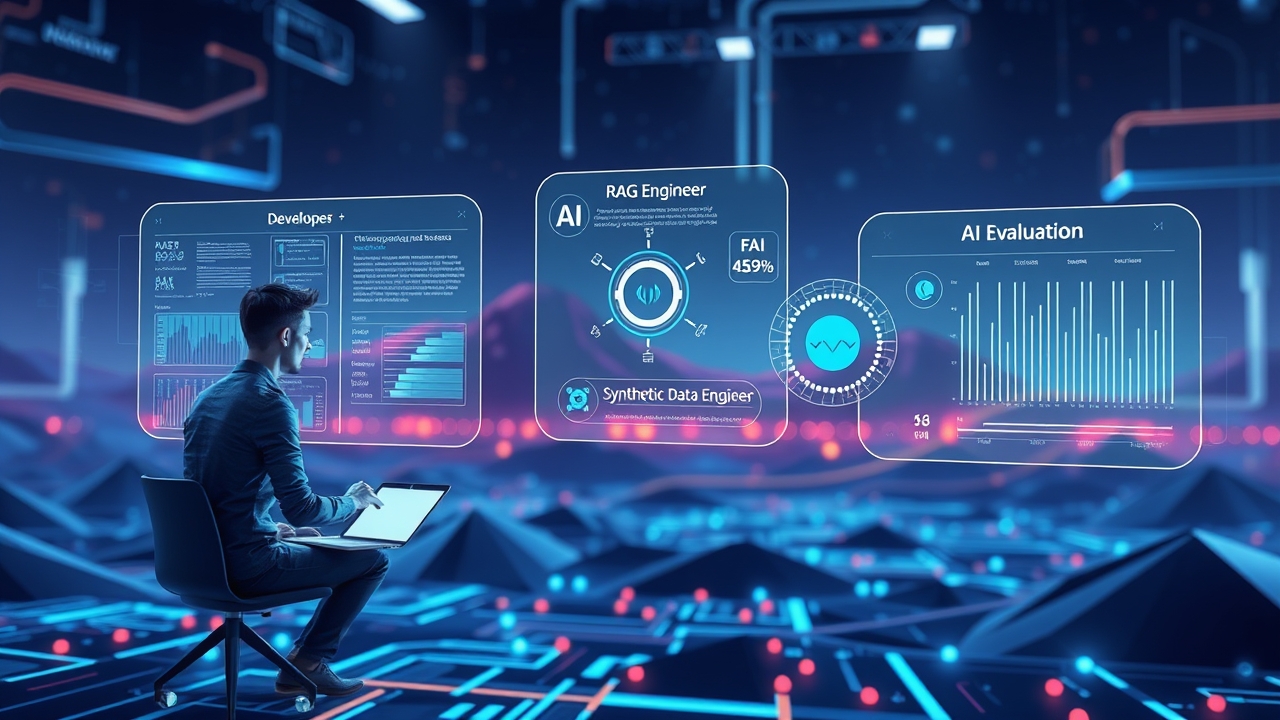
Why AI-Adjacent Careers Are the Future of Tech
The artificial intelligence revolution is not just about AI itself but about the ecosystem it creates. By 2026, AI-adjacent careers will dominate the tech industry, offering developers and professionals unparalleled opportunities to leverage AI technologies without being traditional AI engineers. These roles bridge the gap between AI development and practical implementation, making them accessible to a broader range of professionals. Companies are increasingly investing in AI-driven solutions, creating a surge in demand for specialized roles that can optimize, evaluate, and integrate AI models into real-world applications. Transitioning into these careers ensures job security, competitive salaries, and the chance to shape the future of technology.
Top AI-Adjacent Careers to Watch in 2026
- AI Evaluator: These professionals assess the performance, fairness, and accuracy of AI models, ensuring they meet ethical and regulatory standards. They play a crucial role in mitigating biases and improving model reliability.
- RAG (Retrieval-Augmented Generation) Engineer: RAG engineers combine information retrieval with generative AI to create more accurate and context-aware AI responses. This role is essential for developing chatbots, virtual assistants, and enterprise AI tools.
- Synthetic Data Engineer: As real-world data becomes scarce or restricted by privacy laws, synthetic data engineers create artificial datasets that mimic real-world scenarios. These datasets are used to train AI models without compromising sensitive information.
- AI Product Manager: These professionals bridge the gap between AI developers and business stakeholders, translating technical capabilities into marketable products. They focus on AI-driven product strategy, roadmaps, and go-to-market plans.
- Prompt Engineer: Prompt engineers design and refine the inputs that guide AI models, optimizing their outputs for specific tasks. This role is critical for improving AI interactions in customer service, content creation, and automation.
- AI Ethics Consultant: With AI’s growing influence, ethical considerations are paramount. AI ethics consultants ensure AI systems adhere to moral and legal standards, addressing issues like bias, transparency, and accountability.
- AI Infrastructure Engineer: These engineers design and maintain the infrastructure required to deploy and scale AI models. They work with cloud platforms, Kubernetes, and other tools to ensure seamless AI integration.
Core Responsibilities and Skill Requirements for Each Role
To transition into AI-adjacent careers, professionals must acquire a mix of technical and soft skills tailored to their desired role. Here’s a breakdown of the key responsibilities and skills required for each career path:
AI Evaluator
- Evaluate AI models for accuracy, fairness, and bias using tools like fairness indicators and explainable AI (XAI) frameworks.
- Design and conduct testing protocols to measure model performance under different scenarios.
- Collaborate with AI developers to identify and address weaknesses in AI systems.
- Stay updated on ethical guidelines and regulatory requirements for AI deployment.
- Skills Required: Python, data analysis, statistical modeling, ethical AI frameworks, communication skills.
RAG Engineer
- Develop and optimize retrieval mechanisms to enhance generative AI models.
- Integrate knowledge bases and APIs to improve AI responses.
- Fine-tune models for specific use cases, such as customer support or content generation.
- Monitor and update AI systems to ensure they remain accurate and relevant.
- Skills Required: Python, natural language processing (NLP), machine learning, API integration, problem-solving.
Synthetic Data Engineer
- Design algorithms to generate synthetic datasets that mimic real-world data.
- Ensure datasets comply with privacy laws and industry standards.
- Collaborate with data scientists to validate the usability of synthetic data.
- Optimize data generation processes for efficiency and scalability.
- Skills Required: Python, data generation techniques, privacy laws, statistical modeling, cloud computing.
How to Transition into AI-Adjacent Careers
Transitioning into AI-adjacent careers requires a strategic approach, combining education, hands-on experience, and networking. Here’s a step-by-step roadmap to help you get started:
Step 1: Identify Your Target Role
Research the AI-adjacent roles that align with your interests, skills, and career goals. Consider factors like job demand, salary potential, and required skill sets. Tools like LinkedIn, Glassdoor, and Indeed can provide insights into job market trends and salary ranges.
Step 2: Upskill with Relevant Courses and Certifications
- Enroll in online courses focused on AI and machine learning fundamentals, such as Coursera’s ‘AI for Everyone’ or Udacity’s ‘AI Programming with Python’.
- Pursue certifications in specialized areas like NLP, data engineering, or AI ethics from platforms like Google Cloud, Microsoft, or IBM.
- Join communities and forums like Kaggle, Reddit’s r/MachineLearning, or specialized LinkedIn groups to stay updated on industry trends.
Step 3: Gain Practical Experience
Hands-on experience is critical for breaking into AI-adjacent careers. Start by working on personal projects, contributing to open-source AI initiatives, or participating in hackathons. Platforms like GitHub, Kaggle, and HackerRank offer opportunities to build and showcase your skills.
Step 4: Build a Portfolio
Create a portfolio showcasing your projects, certifications, and contributions to the AI community. Include case studies, blog posts, or GitHub repositories that demonstrate your expertise. A strong portfolio can help you stand out to potential employers and clients.
Step 5: Network and Seek Mentorship
Networking is essential for career growth in AI-adjacent fields. Attend industry conferences, webinars, and meetups to connect with professionals in your target role. Platforms like LinkedIn and Twitter are also valuable for building relationships and seeking mentorship from experienced practitioners.
Salary Trends and Job Market Insights for AI-Adjacent Roles
AI-adjacent careers are not only in high demand but also offer competitive salaries. Here’s a snapshot of salary trends for key roles as of 2026:
- AI Evaluator: $100,000 – $150,000 per year, with senior roles exceeding $180,000.
- RAG Engineer: $120,000 – $170,000 per year, depending on experience and location.
- Synthetic Data Engineer: $110,000 – $160,000 per year, with high demand in healthcare and finance sectors.
- AI Product Manager: $130,000 – $190,000 per year, driven by the need for AI-driven products.
- Prompt Engineer: $90,000 – $140,000 per year, with freelance opportunities offering higher rates.
- AI Ethics Consultant: $120,000 – $170,000 per year, particularly in regulated industries like finance and healthcare.
- AI Infrastructure Engineer: $130,000 – $180,000 per year, with cloud and DevOps expertise commanding premium salaries.
Challenges and Opportunities in AI-Adjacent Careers
While AI-adjacent careers offer exciting opportunities, they also come with challenges. Professionals in these roles must navigate rapidly evolving technologies, ethical dilemmas, and market competition. However, the rewards—job security, high salaries, and the chance to shape the future of AI—far outweigh the challenges.
Overcoming the Learning Curve
The field of AI is vast and complex, making it intimidating for newcomers. To overcome the learning curve, break down your goals into smaller, manageable steps. Focus on mastering the fundamentals first, then gradually dive into specialized topics. Use resources like online tutorials, books, and mentorship programs to accelerate your learning.
Addressing Ethical and Regulatory Concerns
AI-adjacent careers often involve ethical and regulatory challenges, such as bias in AI models or data privacy issues. Professionals in these roles must stay informed about evolving regulations and ethical guidelines. Certifications in AI ethics and compliance can enhance your credibility and career prospects.
Leveraging AI Tools and Automation
AI tools and automation can streamline your workflow, allowing you to focus on high-value tasks. Familiarize yourself with tools like TensorFlow, PyTorch, AutoML, and cloud platforms like AWS, Google Cloud, and Azure. Automation can also help you stay updated on industry trends by curating relevant content and alerts.
Future-Proofing Your Career in AI-Adjacent Fields
The tech industry is dynamic, and staying ahead requires continuous learning and adaptability. To future-proof your career in AI-adjacent fields, adopt the following strategies:
- Continuously update your skills by enrolling in advanced courses and certifications.
- Specialize in high-demand areas like AI ethics, synthetic data, or RAG engineering.
- Build a strong professional network by attending industry events and engaging with peers on social media.
- Stay informed about emerging trends by following industry publications, podcasts, and thought leaders.
- Contribute to open-source projects and communities to showcase your expertise and collaborate with others.
Conclusion: Your Path to a Future-Proof AI Career
The rise of AI-adjacent careers presents a golden opportunity for developers and tech professionals to future-proof their skills and thrive in an AI-driven world. By understanding the landscape, upskilling strategically, and seizing opportunities, you can position yourself for success in roles like AI evaluator, RAG engineer, or synthetic data engineer. Start your journey today by identifying your target role, acquiring the necessary skills, and taking actionable steps to break into this exciting field. The future of tech is here—will you be part of it?
# Example Python Code for a Simple AI Evaluator

import numpy as np

from sklearn.metrics import accuracy_score, precision_score
class AIEvaluator:
def __init__(self, model, X_test, y_test):
self.model = model
self.X_test = X_test
self.y_test = y_test
def evaluate_accuracy(self):
predictions = self.model.predict(self.X_test)
return accuracy_score(self.y_test, predictions)
def evaluate_precision(self, positive_class=1):
predictions = self.model.predict(self.X_test)
return precision_score(self.y_test, predictions, pos_label=positive_class)
def evaluate_bias(self, sensitive_attribute):
# Placeholder for bias evaluation logic
return np.mean(self.model.predict(self.X_test[self.X_test[sensitive_attribute] == 1])
- self.model.predict(self.X_test[self.X_test[sensitive_attribute] == 0]))
Frequently Asked Questions (FAQs)
- What are AI-adjacent careers? AI-adjacent careers are roles that work closely with AI technologies but do not require traditional AI engineering skills. Examples include AI evaluators, RAG engineers, and prompt engineers.
- How do I transition into an AI-adjacent career? Transitioning involves identifying your target role, upskilling through courses and certifications, gaining practical experience, building a portfolio, and networking with professionals in the field.
- What skills are most in demand for AI-adjacent roles? Key skills include Python, data analysis, machine learning, ethical AI frameworks, NLP, and cloud computing. Soft skills like communication and problem-solving are also highly valued.
- Are AI-adjacent careers lucrative? Yes, AI-adjacent careers offer competitive salaries, with roles like AI product manager and AI infrastructure engineer commanding six-figure salaries.
- What challenges do professionals face in AI-adjacent careers? Challenges include rapidly evolving technologies, ethical dilemmas, and market competition. However, the rewards often outweigh these challenges.
Resources to Get Started with AI-Adjacent Careers
Keywords:
AI careers, future-proof skills, AI evaluators, RAG engineers, synthetic data engineers, tech industry trends, AI job roles, developer roadmap, AI salary trends, transition to AI careers,





