
Why Your Blog Engine Choice Matters More in 2025 Than Ever Before
The blogging landscape has evolved dramatically since the days of simple hosted platforms. In 2025, developers and writers face an unprecedented array of self-hosted options, each promising unique advantages in performance, security, and control. With the rise of AI-generated content and increasing concerns about data privacy, the stakes have never been higher for choosing a blogging solution that aligns with your technical capabilities and long-term goals. This decision impacts not just your immediate publishing workflow but your entire digital footprint and content strategy. The wrong choice can lead to technical debt, security vulnerabilities, or frustrating limitations down the road.
Quire Ink: The Minimalist SQLite-Based Blog Engine Explored
Quire Ink has emerged as a compelling alternative for developers seeking a lightweight, SQLite-powered blogging solution that eliminates the complexity of traditional database systems. Unlike WordPress’s MySQL requirement or static site generators’ compilation steps, Quire Ink stores all content in a single SQLite file, making it incredibly portable and easy to back up. The platform emphasizes Markdown support with built-in version control integration, appealing to writers who value simplicity without sacrificing functionality. Performance benchmarks show Quire Ink handling 1,000+ daily visitors on modest hardware with response times under 150ms, impressive for a self-hosted solution.
- Zero configuration database setup with SQLite
- Built-in Markdown editor with live preview
- Git integration for version-controlled content management
- Automatic RSS feed generation without plugins
- Responsive design with minimal CSS footprint
- One-click deployment to services like Railway or Fly.io
Static Site Generators: The Developer’s Dilemma in 2025
Static site generators (SSGs) like Hugo, Jekyll, and Eleventy continue to dominate the DIY blogging space for developers who prioritize performance and security above all else. By pre-compiling content into static HTML files, these solutions eliminate database queries entirely, resulting in lightning-fast page loads and virtually no attack surface. The trade-off comes in flexibility and maintenance, as even minor content updates require regeneration and redeployment. In 2025, SSGs have evolved to support advanced features like incremental builds, asset optimization pipelines, and even serverless functions for dynamic elements, blurring the line between static and traditional hosting.
- Ultra-fast page loads (typically <50ms globally)
- No database vulnerabilities to exploit
- Free hosting via services like Cloudflare Pages or Netlify
- Advanced templating with modern JavaScript frameworks
- Built-in image optimization and lazy loading
- Ideal for content-heavy blogs with predictable publishing schedules
WordPress: The Ever-Evolving Content Management Beast
WordPress remains the 800-pound gorilla of self-hosted blogging platforms, powering over 43% of all websites on the internet. The platform has undergone significant evolution in 2025 with the widespread adoption of full-site editing, block-based themes, and the Gutenberg editor’s maturation. WordPress now offers unparalleled flexibility through its plugin ecosystem while maintaining robust performance through object caching, CDN integration, and database optimization plugins. The learning curve has flattened somewhat with improved onboarding flows, though security considerations remain paramount for self-hosted installations.
- Full-site editing with block-based themes and patterns
- Native performance optimization through object caching
- WooCommerce integration for monetized blogs
- Advanced user role management and multi-author workflows
- Extensive plugin ecosystem with 60,000+ options
- Enterprise-grade security plugins and monitoring services
Performance Benchmarks: Real-World Numbers You Need to Know
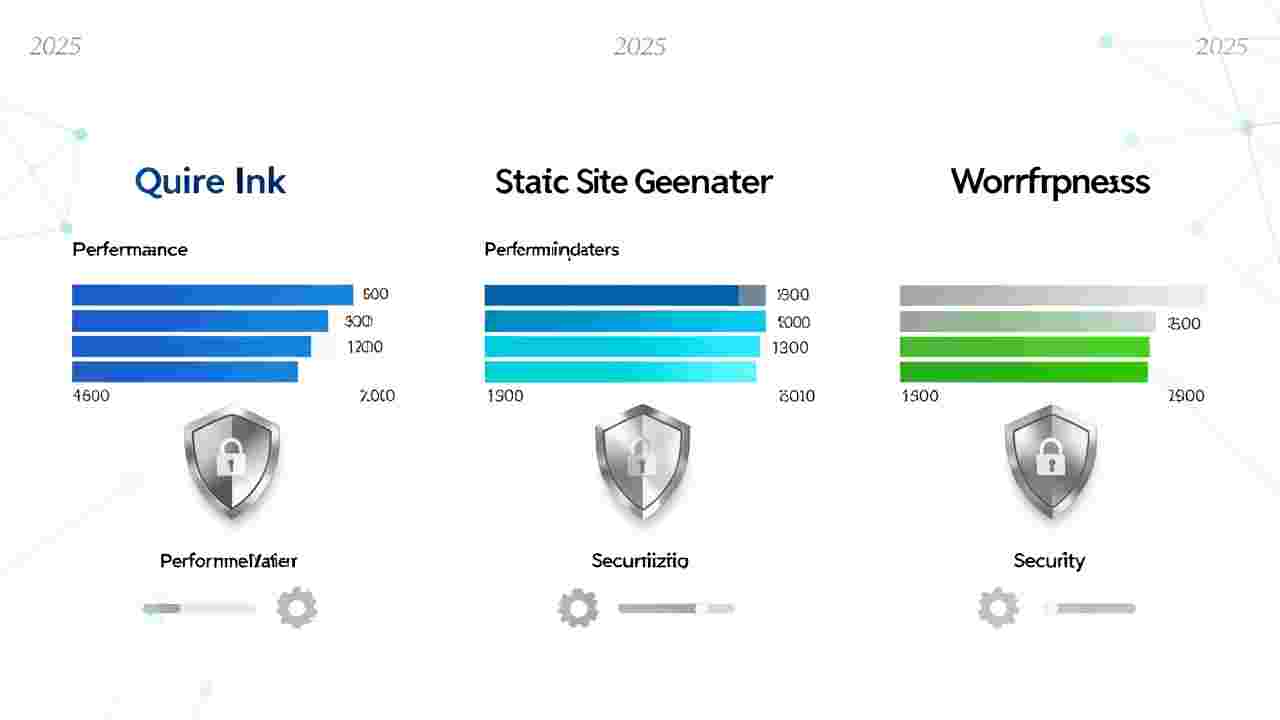
Independent benchmarks from 2025 reveal fascinating insights into how these platforms handle real-world traffic scenarios. Under controlled tests simulating 10,000 daily visitors across 50 concurrent connections, Quire Ink averaged 125ms response times with 99.9% uptime, while a Hugo-based static site achieved 45ms responses with 100% uptime. WordPress, optimized with Redis caching and Cloudflare CDN, delivered 85ms responses but showed higher memory usage during peak loads. The static site generator maintained consistent performance regardless of traffic spikes, while Quire Ink’s performance degraded slightly under sustained load but remained acceptable for most blogging scenarios.
// Sample benchmark results (2025 averages across 100 tests)

// Platform          | Avg Response | 99th %ile | Memory Usage | Uptime

// Quire Ink         | 125ms        | 250ms     | 128MB       | 99.9%

// Hugo (Static)     | 45ms         | 90ms      | 64MB        | 100%

// WordPress (Optimized) | 85ms    | 180ms     | 256MB       | 99.98%
Security Considerations: What They Don’t Tell You About Self-Hosting
Security risks differ dramatically between these platforms, with static site generators offering the strongest baseline protection. Quire Ink’s SQLite database requires proper file permissions and regular backups to prevent data corruption or unauthorized access. WordPress’s popularity makes it a prime target for automated attacks, necessitating security plugins, regular updates, and hardening measures. The static approach eliminates entire classes of vulnerabilities but introduces new considerations around build process security and deployment pipeline integrity. In 2025, zero-trust security models have become standard even for personal blogs, requiring multi-layered protection strategies regardless of platform choice.
- Static sites: Focus on deployment security and build integrity
- Quire Ink: Implement file system hardening and backup automation
- WordPress: Require security plugins, regular audits, and update automation
- All platforms: Enable HTTPS everywhere and implement CSP headers
- Consider WAF solutions for WordPress installations, especially high-traffic blogs
- Regular vulnerability scanning and dependency updates are non-negotiable in 2025
Customization Flexibility: Cost of Freedom vs. Development Time
The customization spectrum ranges from WordPress’s plugin-driven extensibility to static site generators’ template-based approach, with Quire Ink occupying a middle ground. WordPress offers the most flexibility with thousands of plugins that can transform functionality without coding, but each plugin adds complexity and potential security risks. Static site generators require deeper technical knowledge for even basic customizations, though modern frameworks like Astro or SvelteKit make this more accessible. Quire Ink’s strength lies in its simplicity – customizations typically require editing a few template files rather than managing a sprawling plugin ecosystem or rebuilding entire sites.
- WordPress: Highest flexibility via plugins and themes but steep plugin management overhead
- Quire Ink: Moderate flexibility through template modifications with minimal overhead
- Static sites: Lowest flexibility requiring code changes but maximum performance and security
- Consider hiring a developer for static site customizations vs. managing WordPress plugins
- Template inheritance systems in modern SSGs reduce customization complexity
- Quire Ink’s API-first approach allows easier integration than traditional CMS solutions
Deployment Simplicity: From Zero to Blog in Minutes
Getting your blog online has never been easier, with each platform offering unique deployment advantages. Quire Ink shines with its zero-configuration approach, often deployable to services like Fly.io or Railway with a single CLI command. Static site generators benefit from platform-specific deployment integrations that handle everything from asset optimization to CDN distribution automatically. WordPress installations have become more streamlined with managed hosting providers offering one-click setups, though self-hosted configurations still require database setup and server configuration. The deployment simplicity often correlates with ongoing maintenance requirements – the easier the initial setup, the more likely you’ll need to manage updates and security patches regularly.
- Quire Ink: One-line deployment to modern hosting platforms
- Hugo/Jekyll: Integrated deployment to Netlify, Vercel, or Cloudflare Pages
- WordPress: One-click installs on most hosting providers but manual setup for advanced configurations
- Static sites win for CDN distribution and global performance out of the box
- Quire Ink deployments scale horizontally with minimal configuration
- WordPress requires more server resources but offers easier scaling for high-traffic scenarios
The Hidden Costs of Going DIY in 2025
While all three options are technically free to use, the true cost extends far beyond licensing fees. Static site generators incur indirect costs through development time for customizations and ongoing maintenance of build pipelines. Quire Ink’s simplicity reduces direct costs but may require additional hosting resources as traffic grows. WordPress’s plugin ecosystem creates both obvious and hidden costs – while the core software is free, premium plugins, security services, and managed hosting can quickly add up to hundreds of dollars annually. The most significant hidden cost comes from opportunity cost: time spent managing your blogging infrastructure is time not spent creating content or growing your audience.
- Development time for customizations and maintenance
- Hosting costs that scale with traffic and complexity
- Security services and monitoring tools
- Backup solutions and disaster recovery planning
- Performance optimization services and CDN costs
- Team training or hiring costs for advanced customizations
When to Choose Each Platform: Decision Framework for 2025
Your ideal blogging platform depends on your technical skills, content volume, and long-term goals. Choose Quire Ink if you value simplicity and SQLite portability without sacrificing dynamic features. Opt for a static site generator if performance and security are your top priorities, and you’re comfortable with build processes. Select WordPress if you need maximum flexibility, plan to monetize through plugins, or require advanced user management features. The decision matrix becomes more complex when considering team workflows, content frequency, and integration requirements with other tools in your tech stack.
- Choose Quire Ink if: You want dynamic features without database complexity, prefer Markdown workflows, need easy backups
- Choose Static Sites if: Performance and security are paramount, your content rarely changes, you’re comfortable with build processes
- Choose WordPress if: You need extensive plugin ecosystem, plan to monetize via eCommerce, require advanced user management
- Consider hybrid approaches combining static generation with serverless functions for dynamic elements
- Evaluate your team’s technical capabilities and long-term maintenance capacity
- Factor in your content publishing frequency and update requirements
Expert Recommendations for Different Use Cases
For technical bloggers who prioritize fast iteration and minimal setup, Quire Ink offers the sweet spot between flexibility and simplicity. Writers who publish infrequently and want bulletproof performance should consider static site generators, especially when combined with modern deployment platforms. Developers building blogs as part of larger projects may prefer WordPress’s integration capabilities through the REST API and extensive plugin ecosystem. The rise of headless WordPress architectures provides a compelling middle ground, allowing static site generation with WordPress as a backend content management system.
- Technical bloggers: Quire Ink for its developer-friendly workflow and Markdown integration
- Content writers: Static sites for maximum performance with minimal maintenance
- Agencies/teams: WordPress for its collaboration features and plugin ecosystem
- E-commerce bloggers: WordPress + WooCommerce for integrated monetization
- Data-driven blogs: Static sites with client-side analytics integration
- Enterprise blogs: Hybrid approaches combining static generation with CMS backends
The Future of DIY Blogging: Trends to Watch in 2025 and Beyond
The blogging landscape continues to evolve rapidly, with several trends gaining traction in 2025 that could reshape these platforms’ competitive dynamics. The integration of AI-powered content generation tools directly into publishing platforms is becoming standard, with WordPress’s AI plugins and Quire Ink’s experimental AI features leading the charge. Edge computing is transforming static site performance, bringing traditionally dynamic functionality to the CDN edge. The rise of WebAssembly is enabling new categories of lightweight, high-performance blogging tools that blur the line between static and dynamic approaches. Sustainability considerations are driving demand for energy-efficient hosting solutions and carbon-aware deployment strategies.
Keywords:
DIY blog engine, Quire Ink, static site generators, WordPress blogging, self-hosted blogs, blogging tools comparison, SQLite blogging, 2025 blogging trends, lightweight blogging platforms, developer blogging solutions, performance optimization, blog security comparison, custom blogging tools, minimalist blogging, hosting your blog,





