Category: Cybersecurity
Tags:asset management, vulnerability management, security tools, CMDB, asset identity, EDR, AWS security, data normalization, confidence scoring, open-source security, IT asset inventory, security tool integration, asset reconciliation, enterprise security,
Why the Asset Identity Crisis is Breaking Your Security Posture
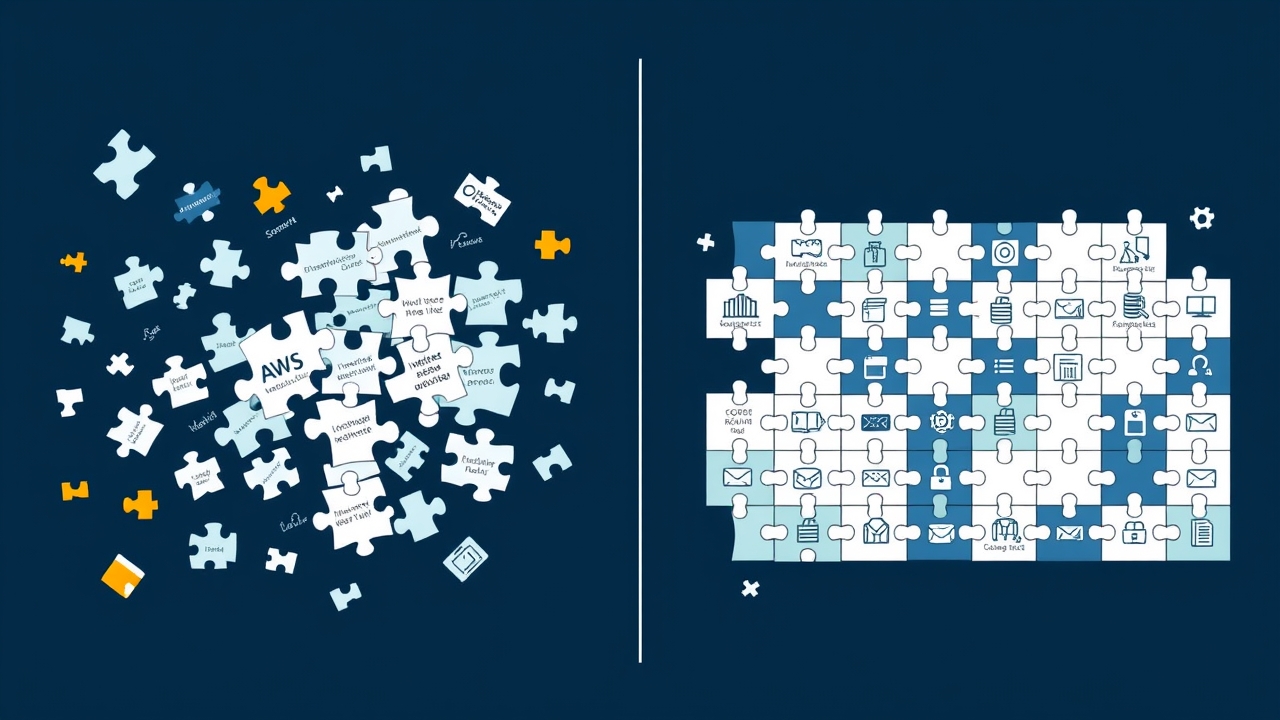
In today’s distributed IT environments, security teams rely on a patchwork of tools—each with its own method of identifying assets. AWS instances might be labeled by instance ID, EDR solutions track endpoints by hostname or MAC address, vulnerability scanners use IP addresses or DNS names, and cloud services often abstract these identifiers entirely. When these tools can’t agree on what constitutes an ‘asset,’ critical vulnerabilities slip through the cracks. A single asset might appear as three separate entries across your security stack, leading to duplicate alerts, missed patching windows, and an inflated risk profile. The result? Security teams spend more time reconciling data than responding to threats, and executives are left with a false sense of protection based on fragmented reports.
#Cybersecurity #DevSecOps #CloudSecurity #ITOperations #EnterpriseSecurity
The Hidden Costs of Fragmented Asset Data
Beyond the immediate operational headaches, fragmented asset identities carry significant financial and compliance risks. Duplicate remediation efforts inflate operational costs, while inconsistent asset tracking can lead to audit failures or regulatory penalties. For example, a vulnerability scanner might flag an outdated software version on an AWS EC2 instance, but if the EDR tool doesn’t recognize that instance, the security team may prioritize a different asset that doesn’t actually need patching. This misallocation of resources not only wastes IT budget but also creates real security gaps. In worst-case scenarios, critical systems might remain unpatched because they were misclassified or overlooked entirely.
The Flaws in Traditional CMDB Approaches
Many organizations attempt to solve this problem with a Configuration Management Database (CMDB), but this often introduces its own set of challenges. CMDBs require extensive manual input, frequent updates, and rigid data models that struggle to keep pace with dynamic cloud environments. The manual effort to maintain a CMDB can become a full-time job, diverting resources from proactive security measures. Additionally, CMDBs often rely on static inventory data, which fails to capture the ephemeral nature of modern IT assets like serverless functions or auto-scaling groups. For teams embracing DevOps and cloud-native architectures, a traditional CMDB can feel like an anchor rather than an enabler.
A Better Way: Confidence Scoring and Field Normalization
Instead of forcing all tools to conform to a CMDB’s rigid structure, a more agile approach leverages confidence scoring and field normalization to merge asset identities dynamically. The idea is simple: not all identifiers are created equal. For instance, an AWS instance ID is a highly reliable primary key, while a hostname might change frequently. By assigning confidence scores to different fields, you can prioritize the most stable identifiers while allowing for flexibility in others. Field normalization then standardizes these identifiers into a uniform format, ensuring that tools like EDR systems, vulnerability scanners, and cloud platforms can communicate using a common language. This method avoids the overhead of a CMDB while achieving the same—or better—results.
- Assign confidence scores to different asset identifiers (e.g., AWS instance ID = 10, hostname = 5, IP address = 3).
- Normalize fields to a standard format (e.g., convert all hostnames to lowercase, standardize IP address notation).
- Use fuzzy matching to reconcile near-identical assets (e.g., ‘web-server-01’ and ‘WEB-SERVER-01’).
- Implement a lightweight reconciliation engine that merges assets based on the highest confidence matches.
- Store reconciled assets in a centralized database or graph structure for real-time access by security tools.
Step-by-Step: Merging Logic for Asset Reconciliation
To implement this approach, start by extracting asset data from each security tool in your stack. For AWS, pull EC2 instance IDs, instance types, and tags. For your EDR solution, gather hostnames, MAC addresses, and IP addresses. From vulnerability scanners, collect IP addresses, DNS names, and software inventories. Next, normalize these fields into a consistent format—for example, converting all hostnames to lowercase and standardizing IP addresses to eliminate variations like ‘192.168.1.01’ vs. ‘192.168.1.1’. Then, apply confidence scores to each field. Primary keys like AWS instance IDs should have the highest scores, while secondary identifiers like hostnames or IP addresses can have lower scores. Use these scores to merge assets, prioritizing matches with the highest combined confidence. Finally, store the merged assets in a lightweight database or graph structure that can be queried in real time by your security tools.
Resolving Field Conflicts: A Practical Example
Field conflicts are inevitable when merging data from disparate sources. For example, an AWS instance might report an IP address that differs from the IP address recorded by your vulnerability scanner due to network changes or DHCP assignments. To resolve this, prioritize the most stable identifier—in this case, the AWS instance ID—and treat the IP address as a secondary field. If the IP address changes, the asset can still be reliably identified by its instance ID. Similarly, if two tools report the same asset but with different hostnames (e.g., ‘prod-web-01’ vs. ‘prod-web-02’), use fuzzy matching to recognize these as likely the same asset and merge them under the most recent or authoritative hostname. Document these conflict resolution rules to ensure consistency across your team.
Lightweight Implementation: Tools and Open-Source Solutions
You don’t need a CMDB to unify your asset data—just a lightweight reconciliation engine and a few open-source tools. Start with a simple database like PostgreSQL or MongoDB to store your normalized asset data. Use a tool like Apache NiFi or a custom Python script to extract, transform, and load (ETL) data from your security tools into this database. For fuzzy matching, libraries like Python’s ‘fuzzywuzzy’ or ‘rapidfuzz’ can help reconcile near-identical assets. If you prefer a more structured approach, consider using a graph database like Neo4j to model the relationships between assets, identifiers, and tools. For teams with limited engineering resources, open-source solutions like the Center for Internet Security’s (CIS) ‘Asset Inventory’ tools or the ‘OpenCVE’ project offer pre-built modules for asset reconciliation and vulnerability management.
Automating Reconciliation: Scheduling and Triggers
To keep your asset data up to date, automate the reconciliation process. Schedule regular jobs—daily or even hourly—to pull new data from your security tools and update your centralized asset inventory. Use triggers to initiate reconciliation when critical changes occur, such as the creation of a new AWS instance or a major software deployment. For cloud environments, leverage event-driven architectures: set up AWS Lambda functions or Azure Functions to trigger reconciliation whenever an instance is launched or terminated. This ensures that your asset data remains accurate and that your security tools are always working with the most current information. Automation reduces the manual effort required to maintain the system and minimizes the risk of human error.
Validating the Results: Ensuring Accuracy and Trust
After implementing your reconciliation engine, validate the results to ensure accuracy. Start by manually reviewing a sample of merged assets to confirm that the logic is working as intended. Look for cases where assets were incorrectly merged or where conflicts were resolved improperly. Use your security tools to cross-check the merged data—does a vulnerability scanner now agree with your EDR tool on the assets present in your environment? Are there any assets that are still being missed or duplicated? Iterate on your reconciliation logic based on these findings, adjusting confidence scores or conflict resolution rules as needed. Over time, you’ll build trust in the system and reduce the manual effort required to maintain it.
Integrating with Your Security Workflow
Once your asset reconciliation system is in place, integrate it into your broader security workflow. Use the unified asset data to prioritize vulnerability remediation based on actual asset criticality rather than arbitrary labels. Feed the reconciled data into your SIEM or SOAR platform to correlate alerts with the correct assets. Share the asset inventory with compliance teams to streamline audits and reduce the risk of misreporting. By making the reconciled asset data a central part of your security operations, you’ll reduce duplicate work, improve response times, and gain a clearer picture of your risk posture. This integration turns the asset identity crisis from a liability into a strategic advantage.
Common Pitfalls and How to Avoid Them
Even with a well-designed reconciliation system, several pitfalls can undermine your efforts. One common mistake is over-reliance on static identifiers like hostnames, which can change frequently in dynamic environments. Avoid this by prioritizing primary keys like AWS instance IDs or UUIDs whenever possible. Another pitfall is failing to account for ephemeral assets like serverless functions or containers, which may not appear in traditional asset inventories. To address this, include cloud-native asset discovery tools in your reconciliation process. Finally, avoid the temptation to build a monolithic system—start small and iterate. A lightweight, modular approach is far more sustainable than a complex, all-in-one solution that becomes a maintenance nightmare.
The Future of Asset Identity Management
As IT environments continue to evolve, so too must asset identity management strategies. Emerging technologies like AI-driven asset discovery and blockchain-based asset tracking are poised to revolutionize how organizations manage asset identities. AI can analyze patterns in asset behavior to predict changes before they occur, while blockchain offers immutable records of asset provenance and ownership. For now, however, the combination of confidence scoring, field normalization, and automation remains the most practical and scalable solution for most organizations. By adopting this approach, you’ll not only solve the immediate asset identity crisis but also position your security team for future challenges. The goal isn’t just to unify fragmented tools—it’s to build a resilient, adaptive security posture that can keep pace with the rapid evolution of IT.