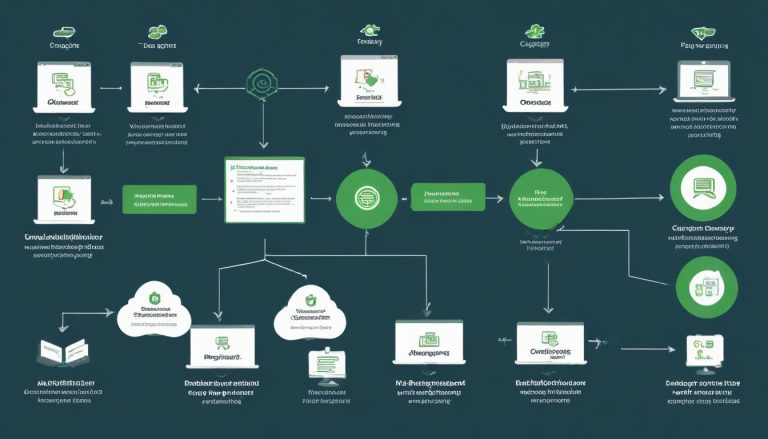
The prevailing story of AI-driven efficiency promises instant speed, yet removing every hint of hesitation can erode decision quality, debugging intuition, and the development of deep expertise.
Defining Cognitive Friction
Cognitive friction refers to the purposeful, temporary resistance that forces a developer to pause, reflect, and re-evaluate assumptions before acting, contrasting with pure friction that merely slows execution without adding insight.
An economic model quantifies this value by treating delayed cognition as a cost that can be offset by higher quality outcomes, reduced rework, and sustained skill growth, yielding a measurable cost per delayed decision.
- Cognitive load transfer rate
- Decision latency vs. quality ratio
- Debugging-muscle index
- Cost per delayed decision
Measurement methodology combines telemetry from IDEs, time-stamped decision logs, and post-mortem analysis to calculate each metric, allowing teams to translate abstract friction into concrete financial terms.
Real-world examples include AI-assisted code completion that offers instant suggestions, local-first agents like OpenClaw that deliberately delay external API calls, and historical autocomplete practices that offloaded memory tasks, illustrating how measured friction improves robustness.
A practical audit checklist guides readers to evaluate their own AI offloads, calculate the true cost of delayed cognition, and design policies that preserve valuable friction without sacrificing productivity.
Actionable Takeaways
Developers should audit AI-assisted tools, quantify the cost of each delayed decision using the outlined metrics, and implement thresholds that retain beneficial friction while maintaining overall throughput.