Category: Career & Hiring
Tags:hiring debrief, interview evaluation, tech hiring process, interviewer feedback, job interview tips, salary negotiation, career growth, recruitment insights,
What Is a Hiring Debrief and Why Does It Matter?
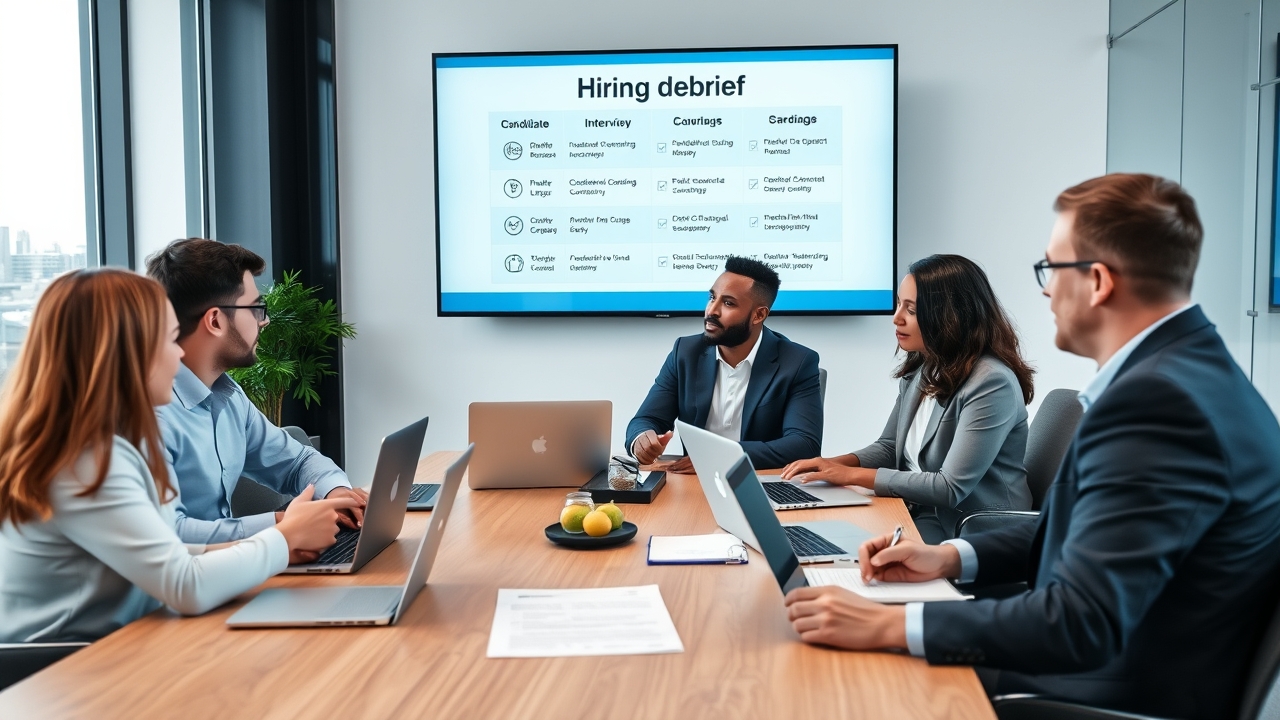
A hiring debrief is a structured discussion held by interviewers after candidate evaluations to compare notes, discuss strengths and weaknesses, and reach a consensus on hiring decisions. While candidates often leave interviews feeling uncertain about their performance, the debrief is where the real evaluation happens. In tech companies, this process typically involves multiple stakeholders—hiring managers, team leads, and HR—who review interview feedback, calibrate assessments, and finalize recommendations. The outcome of this meeting can make or break your chances, even if you performed well in individual interviews. Understanding this behind-the-scenes process is crucial because it reveals how subjective factors like communication style, cultural fit, and perceived potential influence final decisions. By aligning your interview approach with how debriefs work, you can strategically present your skills and mindset to leave a lasting positive impression.
#CareerDevelopment #InterviewTips #Hiring #TechCareers #JobSearch
The Role of Interviewers in the Hiring Debrief
During the hiring debrief, interviewers act as both evaluators and collaborators, sharing their observations to build a holistic picture of each candidate. Their roles vary depending on their position within the company. Hiring managers often focus on technical competency and problem-solving ability, while team members may prioritize collaboration and cultural alignment. HR representatives typically ensure that the process adheres to company policies and diversity goals. Each interviewer’s perspective carries different weight, and inconsistencies in feedback can lead to prolonged discussions or even rejection. For instance, if one interviewer rates your coding skills highly but another questions your communication, the team may request another round of evaluation. Recognizing these dynamics allows you to tailor your responses in interviews to address potential concerns before the debrief even begins.
How Calibration Reviewers Shape the Final Decision
Calibration reviewers play a pivotal role in standardizing the hiring process, especially in larger organizations. These individuals, often senior managers or HR specialists, compare feedback across multiple candidates for the same role to ensure consistency and fairness. They look for patterns in ratings, such as recurring red flags or standout strengths, to identify top-tier candidates. If your interview feedback contains vague statements like ‘strong potential’ or ‘good fit’ without concrete examples, calibration reviewers may downgrade your application. To influence this stage positively, ensure your interviewers leave the session with clear, evidence-based notes about your contributions. Use structured responses during interviews to highlight specific achievements, problem-solving approaches, and soft skills, making it easier for calibration teams to advocate for your candidacy.
The Silent Killer of Hiring Decisions: Inconsistent Signals
One of the biggest challenges in hiring debriefs is dealing with inconsistent signals in interviewer feedback. Imagine an interview where you excel in a technical challenge but struggle with a behavioral question about conflict resolution. One interviewer might see this as a minor weakness, while another could view it as a dealbreaker. Such inconsistencies often lead to prolonged debates, additional interviews, or even rejection if the team cannot reach a consensus. To mitigate this risk, proactively address potential red flags during your interview. For example, if you lack experience in a specific tool mentioned in the job description, acknowledge it upfront and explain how you’ve adapted to new technologies in the past. This demonstrates self-awareness and a willingness to learn, which can neutralize negative signals and shift the focus to your overall fit for the role.
Strategies to Make Your Thinking Visible During Interviews
The most effective candidates don’t just answer questions—they make their thought process transparent. Interviewers evaluate not only what you know but also how you think under pressure. To leave a lasting impression, use structured frameworks like STAR (Situation, Task, Action, Result) for behavioral questions and THINK (Think, Hypothesize, Investigate, Notice, Know) for technical problems. Explain your reasoning aloud, even when you’re unsure, as this shows analytical rigor. Additionally, ask clarifying questions to demonstrate engagement and a methodical approach. For example, if given a coding problem, ask about edge cases or constraints before diving into a solution. This level of detail ensures your interviewers have concrete examples to reference during the debrief, increasing your chances of a favorable evaluation.
Actionable Steps to Influence the Hiring Debrief
While you can’t control the debrief directly, you can significantly influence its outcome by taking strategic steps before, during, and after your interview. Before the interview, research the company’s recent projects, challenges, and culture to tailor your responses. During the interview, focus on delivering concise, structured answers that highlight your expertise and problem-solving skills. After the interview, send a personalized thank-you email to each interviewer, referencing specific topics discussed to reinforce your engagement. If you receive feedback, follow up professionally to address any concerns. Finally, if you don’t advance, request constructive criticism to identify areas for improvement. These actions demonstrate professionalism and leave a positive impression, even if the outcome isn’t immediate.
Common Mistakes Candidates Make in the Hiring Process
- Failing to ask questions during the interview, which signals disinterest or lack of engagement.
- Using vague language in responses, making it difficult for interviewers to assess your fit.
- Overlooking the importance of soft skills, which are often deciding factors in debriefs.
- Ignoring company culture fit, leading to misalignment with the team’s values.
- Not following up after the interview, missing an opportunity to reinforce your candidacy.
How to Recover from a Weak Interview Performance
Even the most prepared candidates can have off days, but a single weak interview doesn’t have to derail your job search. If you suspect your performance wasn’t stellar, take immediate action to mitigate the damage. First, review your interview notes or request feedback from the hiring manager to identify specific areas of concern. Next, send a concise follow-up email acknowledging the discussion points and reiterating your enthusiasm for the role. Frame your message around growth and learning, such as, ‘I’ve reflected on our conversation and want to clarify my approach to [specific topic].’ This shows accountability and a proactive mindset. Additionally, leverage your network to get an internal referral, as employee recommendations can significantly boost your credibility during the debrief.
The Long-Term Impact of a Positive Hiring Debrief
A favorable hiring debrief doesn’t just secure a job offer—it sets the stage for your long-term success within the company. Candidates who perform well in debriefs often receive faster promotions, better mentorship opportunities, and more challenging projects. This is because their initial evaluation demonstrates not only technical competence but also alignment with the company’s goals and culture. Conversely, candidates who struggle in debriefs may find themselves stuck in cycles of additional interviews or overlooked for growth opportunities. To maximize your long-term potential, treat every interview as an opportunity to showcase your unique value proposition and leave a memorable impression. Over time, this consistency will build your reputation as a high-potential hire, opening doors to career advancement.