Category: Technology & AI Contracts
Tags:AI vendor contracts, SOC 2 risks, AI security compliance, vendor due diligence, data sovereignty in AI, contract negotiation for AI tools, sub-processor transparency, AI training data risks, vendor lock-in pitfalls, AI legal compliance,
Why SOC 2 and Uptime SLAs Alone Aren’t Enough for AI Vendor Contracts
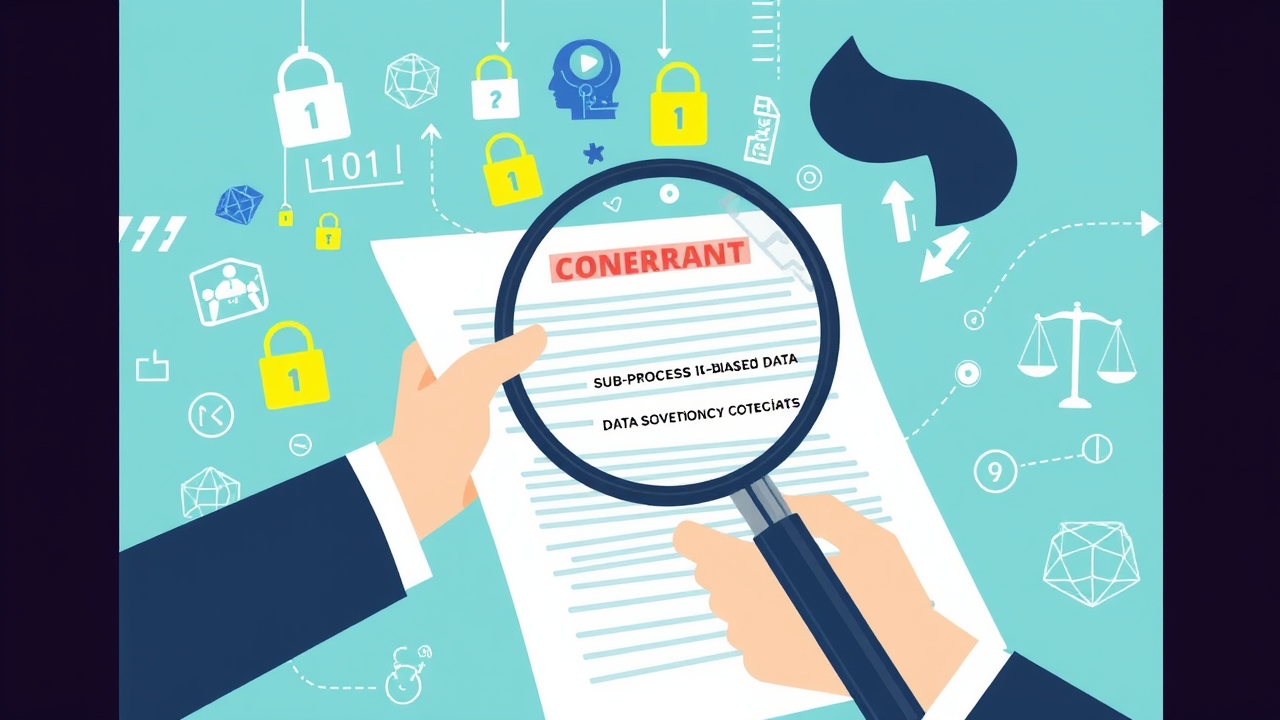
While SOC 2 compliance and uptime SLAs are critical for evaluating AI vendors, they only scratch the surface of potential risks. SOC 2 focuses on security, confidentiality, and processing integrity, but it doesn’t address the nuances of AI-specific vulnerabilities such as model bias, training data transparency, or sub-processor chains. Similarly, uptime SLAs ensure availability but fail to account for data residency issues, jurisdictional risks, or the ethical implications of AI-driven decision-making. AI contracts demand a deeper dive into operational, legal, and ethical safeguards to prevent costly surprises.
#ArtificialIntelligence #Cybersecurity #SaaS #RiskManagement #VendorManagement
The Hidden Risks Lurking in AI Vendor Contracts
- Sub-processor transparency: Many AI vendors rely on third-party APIs, cloud services, or open-source components without disclosing these dependencies. Hidden sub-processors can introduce unknown security gaps, compliance violations, or even geopolitical risks if data flows through sanctioned jurisdictions.
- Training data defaults: AI models are shaped by the data they’re trained on, but vendors often obscure the sources, quality, or biases in their datasets. Contracts rarely specify data provenance, leaving you vulnerable to regulatory fines (e.g., under GDPR or CCPA) or reputational damage if the AI produces biased or discriminatory outcomes.
- Vendor lock-in: AI contracts frequently include proprietary formats, exclusive APIs, or restrictive licensing terms that make it difficult to migrate to alternatives. Without clear exit clauses, you risk being trapped in a contract where data extraction, model retraining, or switching vendors becomes prohibitively expensive.
- Jurisdictional sovereignty: Data processed by AI vendors may be subject to foreign laws (e.g., U.S. Cloud Act, EU GDPR), which can override contractual protections. Vendors may not disclose where your data is stored or processed, exposing you to unexpected legal liabilities or surveillance risks.
- Model update and maintenance terms: AI models degrade over time without updates, but contracts often lack clarity on who owns the updated models, how frequently they’re retrained, or whether you can audit these changes. This opacity can lead to compliance failures or degraded performance without recourse.
How to Assess AI Vendor Security Beyond Standard Certifications
To truly evaluate an AI vendor’s security posture, you need to look beyond SOC 2 reports and uptime SLAs. Start by requesting a detailed list of all sub-processors and their compliance certifications, including their SOC 2, ISO 27001, or industry-specific audits. Ask for transparency reports on data handling practices, such as where training data is sourced, how it’s anonymized, and whether it includes sensitive or proprietary information. Additionally, probe the vendor’s incident response plan for AI-specific threats, like model poisoning or adversarial attacks, and ensure they provide regular penetration testing results.
Key Questions to Ask Before Signing an AI Vendor Contract
- Can you provide a full list of sub-processors and their roles in the AI pipeline? Are they SOC 2 or ISO 27001 certified?
- How is training data collected, stored, and processed? What steps are taken to ensure data quality and minimize bias?
- Where is my data stored and processed? Are there any geopolitical jurisdictions involved that could trigger legal risks?
- What are the exit terms for migrating away from your AI tools? Can we extract our data in a usable format without penalties?
- How often are your AI models updated, and who owns the updated models? Can we audit these updates?
- What happens to our data if you’re acquired or go out of business? Is there a data escrow or migration plan?
- How do you handle AI-specific security threats like model poisoning, adversarial attacks, or data leakage?
- What are your policies on data retention, deletion, and third-party data sharing?
- Can you provide references or case studies from clients in our industry with similar use cases?
- What indemnification and liability clauses protect us in case of data breaches, compliance failures, or AI errors?
Negotiating Fair Contract Clauses for AI Tools
Negotiating AI vendor contracts requires a balance between flexibility, security, and compliance. Start by drafting a data processing agreement (DPA) that explicitly defines data ownership, usage rights, and transfer mechanisms. Push for clauses that mandate transparency in sub-processor chains and require vendors to disclose any changes to data handling practices. Include strict data residency requirements to ensure your data remains within approved jurisdictions, and negotiate for the right to audit the vendor’s AI models and training data periodically. Exit clauses should guarantee data portability and a smooth transition, with penalties for non-compliance. Additionally, insist on clear liability definitions, especially for AI-driven errors or regulatory violations, and ensure the contract includes robust indemnification protections.
Red Flags in AI Vendor Contracts You Should Never Ignore
- Vague or absent sub-processor disclosures: If the vendor can’t (or won’t) list all third parties involved in processing your data, walk away. Hidden dependencies increase risk exponentially.
- No data portability rights: Contracts without clear data extraction clauses force you into vendor lock-in, making it impossible to switch providers without losing critical data.
- Overly broad indemnification clauses: Vendors may shift liability onto you for their AI’s failures. Ensure indemnification is mutual and covers regulatory fines, breach liabilities, and AI errors.
- No audit or transparency rights: Without the ability to review training data, model updates, or security practices, you’re flying blind. Demand regular audits and transparency reports.
- Unilateral modification rights: If the vendor can change terms, data handling practices, or model features without your consent, you risk unexpected disruptions. Negotiate for mutual consent requirements.
- No data destruction guarantees: Upon contract termination, ensure the vendor commits to irrevocable data deletion unless you explicitly request an extension. Otherwise, your data may linger in their systems.
- Ambiguous jurisdiction clauses: If the contract doesn’t specify governing law or data residency, you’re exposed to foreign legal risks. Clarify jurisdiction and ensure data stays within approved regions.
Real-World Case Studies: AI Vendor Risks in Action
One healthcare provider discovered too late that their AI vendor’s sub-processor chain included a cloud service in a jurisdiction subject to the U.S. Cloud Act. When a legal request for user data arose, the vendor complied without notifying the client, leading to a HIPAA violation and a $2.5 million fine. In another case, a financial services firm’s AI model, trained on biased historical data, produced discriminatory loan approvals, triggering lawsuits and reputational damage. These examples underscore the importance of due diligence beyond standard certifications. Always validate the vendor’s training data practices, sub-processor chains, and legal safeguards before signing.
Future-Proofing Your AI Vendor Relationships
The AI landscape evolves rapidly, so your contracts must too. Include clauses that allow for periodic reassessment of security practices, model performance, and compliance with emerging regulations like the EU AI Act or state-level privacy laws. Monitor the vendor’s updates for AI-specific threats, such as new adversarial attack vectors or changes in data processing locations. Regularly audit their sub-processors and training data to ensure ongoing transparency. By building flexibility and adaptability into your contracts, you can mitigate risks as AI technologies and regulatory environments shift.
Final Checklist: Before You Sign an AI Vendor Contract
- Verify SOC 2 Type II and ISO 27001 certifications, and request additional AI-specific audits if available.
- Obtain a complete list of sub-processors, their roles, and their compliance certifications.
- Confirm data residency requirements and ensure no geopolitical risks are involved.
- Negotiate clear data ownership, usage rights, and transfer mechanisms in the DPA.
- Demand transparency in training data sources, quality controls, and bias mitigation strategies.
- Include robust exit clauses for data portability and migration assistance without penalties.
- Push for mutual indemnification and liability definitions covering AI errors and compliance failures.
- Require regular audits and transparency reports on model updates and security practices.
- Clarify jurisdiction and governing law to avoid unexpected legal liabilities.
- Review the contract for red flags like unilateral modification rights or vague sub-processor disclosures.