In an era where artificial intelligence (AI) is revolutionizing healthcare, the protection of sensitive patient data remains a critical challenge. Traditional AI models often require centralized data collection, raising serious concerns about privacy breaches and regulatory violations. Healthcare organizations must navigate the delicate balance between leveraging AI for improved diagnostics, treatment planning, and operational efficiency while ensuring strict compliance with privacy laws such as HIPAA. This is where privacy-preserving AI techniques like federated learning and differential privacy come into play. These innovative approaches enable the development of robust AI models without the need to centralize sensitive patient data, thereby safeguarding individual privacy and maintaining regulatory compliance.
Understanding Privacy-Preserving AI in Healthcare
Privacy-preserving AI refers to a suite of techniques designed to protect sensitive data while still enabling meaningful analysis and model training. In healthcare, this is particularly crucial due to the highly personal and confidential nature of patient information. Two of the most prominent methods in this domain are federated learning and differential privacy. Federated learning allows AI models to be trained across multiple decentralized devices or servers holding local data samples, without exchanging the data itself. Instead, only the model updates are shared, which are then aggregated to improve the global model. Differential privacy, on the other hand, adds statistical noise to the data or model outputs to prevent the extraction of sensitive information, ensuring that the presence or absence of any individual in the dataset does not significantly affect the results.
- Federated learning enables collaborative AI model training without centralizing patient data, reducing risks of data breaches.
- Differential privacy adds mathematical noise to protect individual identities while maintaining model accuracy.
- HIPAA compliance is achievable with privacy-preserving AI, as it minimizes data exposure and adheres to strict privacy regulations.
- Healthcare providers can leverage AI insights from diverse datasets without compromising patient confidentiality or legal obligations.
- Privacy-preserving AI fosters trust among patients, clinicians, and regulatory bodies by prioritizing data security and ethical AI practices.
The Role of Federated Learning in Secure Healthcare AI
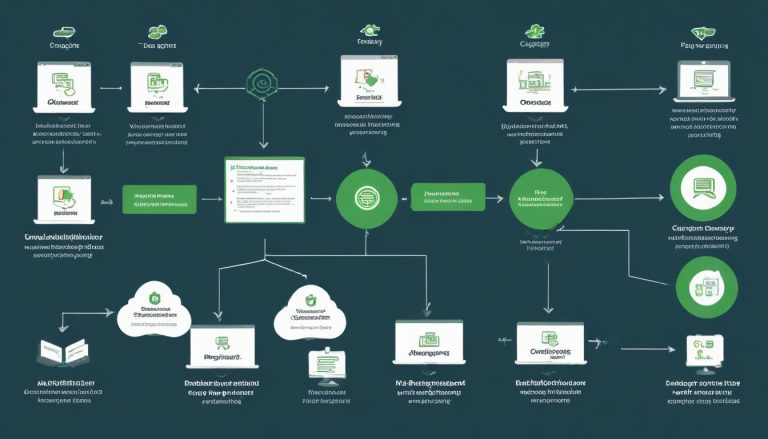
Federated learning has emerged as a game-changer in healthcare AI by allowing institutions to collaboratively train models without sharing raw patient data. This approach is particularly beneficial in scenarios where data silos exist due to geographical, institutional, or legal boundaries. For example, multiple hospitals can participate in a federated learning project to develop a predictive model for patient deterioration. Each hospital trains the model locally using its own patient data, and only the model updates (gradients) are shared with a central server. The central server aggregates these updates to refine the global model, which is then redistributed to the participating institutions. This process ensures that patient data never leaves the local environment, drastically reducing the risk of data breaches while enabling the creation of more accurate and generalizable AI models.
- Federated learning eliminates the need for data centralization, reducing exposure to cyber threats and insider risks.
- It enables multi-institutional collaboration, leading to more robust and diverse AI models in healthcare.
- Local data processing ensures compliance with regional data protection laws like GDPR and HIPAA.
- Real-world applications include disease prediction, drug discovery, and personalized treatment planning.
- Challenges include managing communication overhead, ensuring model consistency, and integrating heterogeneous data sources.
Implementing Differential Privacy in Healthcare AI
Differential privacy is a mathematical framework that adds controlled noise to data or model outputs to obscure individual contributions while preserving the overall utility of the dataset. In healthcare, differential privacy can be applied at various stages of the AI pipeline, such as during data preprocessing, model training, or result publication. For instance, when training an AI model to predict patient outcomes, differential privacy can be used to perturb the gradients or the final model weights. This ensures that an adversary cannot reverse-engineer the model to extract sensitive information about individual patients. Libraries like PySyft and Opacus simplify the implementation of differential privacy in PyTorch, making it accessible for healthcare data scientists and engineers.
- Differential privacy protects patient identities by ensuring that no single individual’s data can be isolated from the model outputs.
- It can be applied to both centralized and federated learning settings, enhancing privacy at every stage.
- The level of privacy is controlled by parameters like epsilon (ε) and delta (δ), which determine the trade-off between privacy and accuracy.
- Healthcare organizations can use differential privacy to publish research findings or share model insights without violating patient confidentiality.
- Tools like PySyft and Opacus provide ready-to-use implementations for integrating differential privacy into AI workflows.
Balancing Accuracy, Performance, and Regulatory Compliance
One of the primary challenges in implementing privacy-preserving AI in healthcare is striking the right balance between model accuracy, computational performance, and regulatory compliance. While federated learning and differential privacy offer robust privacy guarantees, they can introduce additional complexity and overhead. For instance, federated learning requires significant communication between local and global models, which may impact training speed. Similarly, differential privacy’s noise addition can reduce model accuracy if not carefully calibrated. Healthcare organizations must therefore adopt a strategic approach, leveraging advanced techniques like adaptive federated learning, secure aggregation, and privacy budget management to optimize performance without compromising privacy or compliance.
- Adaptive federated learning adjusts the training process dynamically to improve efficiency and reduce communication overhead.
- Secure aggregation protocols ensure that only aggregated model updates are shared, preventing the reconstruction of individual data points.
- Privacy budget management helps control the trade-off between privacy and utility, ensuring models remain both accurate and compliant.
- Benchmarking and validation are essential to ensure that privacy-preserving models meet clinical performance standards.
- Collaboration with AI ethics boards and regulatory experts can provide guidance on navigating compliance challenges.
Practical Implementation: Tools and Frameworks
Implementing privacy-preserving AI in healthcare requires the right tools and frameworks to streamline development and deployment. PyTorch, a leading deep learning framework, supports federated learning and differential privacy through extensions like PySyft and Opacus. PySyft is an open-source library that enables secure and private machine learning by leveraging techniques like federated learning, differential privacy, and secure multi-party computation. Opacus, on the other hand, focuses specifically on differential privacy for PyTorch models, providing easy-to-use APIs for adding noise to gradients during training. Together, these tools empower healthcare data scientists to build and deploy HIPAA-compliant AI models efficiently.
- PyTorch serves as the foundation for building and training AI models in healthcare, with extensive support for privacy-preserving techniques.
- PySyft extends PyTorch to enable federated learning, differential privacy, and secure data collaboration in a privacy-preserving manner.
- Opacus simplifies the implementation of differential privacy in PyTorch models, making it accessible for non-experts.
- TensorFlow Federated and IBM’s Differential Privacy Library are alternative frameworks for privacy-preserving AI.
- Integration with cloud platforms like AWS, Google Cloud, or Azure can further enhance scalability and compliance.
Real-World Applications and Success Stories
Privacy-preserving AI is already making waves in healthcare, with numerous real-world applications demonstrating its potential. For example, the IBM Watson Health team collaborated with multiple healthcare institutions to develop a federated learning model for predicting patient deterioration. By training the model across decentralized datasets without sharing raw data, the team achieved high accuracy while ensuring HIPAA compliance. Similarly, Google’s DeepMind has used federated learning to improve the detection of breast cancer in mammograms, collaborating with hospitals in the UK and the US. These success stories highlight how privacy-preserving AI can drive innovation in healthcare while protecting patient privacy and adhering to regulatory standards.
- Federated learning models for predicting patient deterioration have shown improved accuracy compared to single-institution models.
- AI-driven drug discovery platforms use federated learning to analyze molecular data across pharmaceutical companies without sharing proprietary information.
- Privacy-preserving AI enables multi-institutional clinical trials, where patient data remains decentralized but models are collectively trained.
- Hospitals use differential privacy to publish anonymized patient data for research while preventing re-identification attacks.
- Startups and tech giants are increasingly adopting these techniques to build trust and compliance into their healthcare AI products.
Challenges and Future Directions
Despite its promise, privacy-preserving AI in healthcare faces several challenges that need to be addressed for widespread adoption. One of the key challenges is the computational overhead associated with federated learning and differential privacy, which can slow down training and increase costs. Additionally, ensuring interoperability between diverse healthcare systems and data formats remains a hurdle. Future directions include the development of more efficient federated learning algorithms, advanced privacy-preserving techniques like homomorphic encryption, and standardized frameworks for compliance across different jurisdictions. As AI continues to evolve, collaboration between technologists, healthcare providers, and regulators will be essential to unlock its full potential while safeguarding patient privacy.
- Developing lightweight federated learning algorithms to reduce communication overhead and improve scalability.
- Exploring homomorphic encryption for enabling computations on encrypted data without decryption, further enhancing privacy.
- Creating standardized frameworks for global compliance, such as unified guidelines for HIPAA, GDPR, and other regional regulations.
- Advancing privacy-preserving AI research to handle more complex medical data types, such as genomics and imaging.
- Encouraging open-source collaborations to democratize access to privacy-preserving AI tools and techniques.
Best Practices for Healthcare Organizations
For healthcare organizations looking to implement privacy-preserving AI, adopting best practices is crucial to ensure success and compliance. Begin by conducting a thorough privacy impact assessment to identify potential risks and mitigation strategies. Engage stakeholders, including patients, clinicians, legal experts, and IT teams, to align privacy-preserving AI initiatives with organizational goals and regulatory requirements. Invest in training and upskilling teams on tools like PyTorch, PySyft, and Opacus to build internal expertise. Collaborate with trusted partners, such as cloud service providers or AI consultancies, to accelerate deployment and ensure scalability. Finally, establish robust governance frameworks to monitor compliance, audit model performance, and address any ethical concerns that may arise.
- Conduct a privacy impact assessment to evaluate risks and ensure alignment with HIPAA and other regulations.
- Engage multidisciplinary teams, including legal, clinical, and technical experts, to guide the implementation process.
- Invest in training programs to build internal capabilities in privacy-preserving AI technologies and tools.
- Partner with reputable cloud providers and AI consultancies to leverage expertise and infrastructure.
- Implement continuous monitoring and auditing to ensure ongoing compliance and model performance.