Category: Productivity & Software
Tags:macOS productivity, window management, RetroTaskbar, UX design, Accessibility API, multi-monitor workflow, taskbar utilities, macOS automation, Windows-like interface, macOS tweaks,
Why RetroTaskbar? Bridging macOS and Windows Workflow Gaps
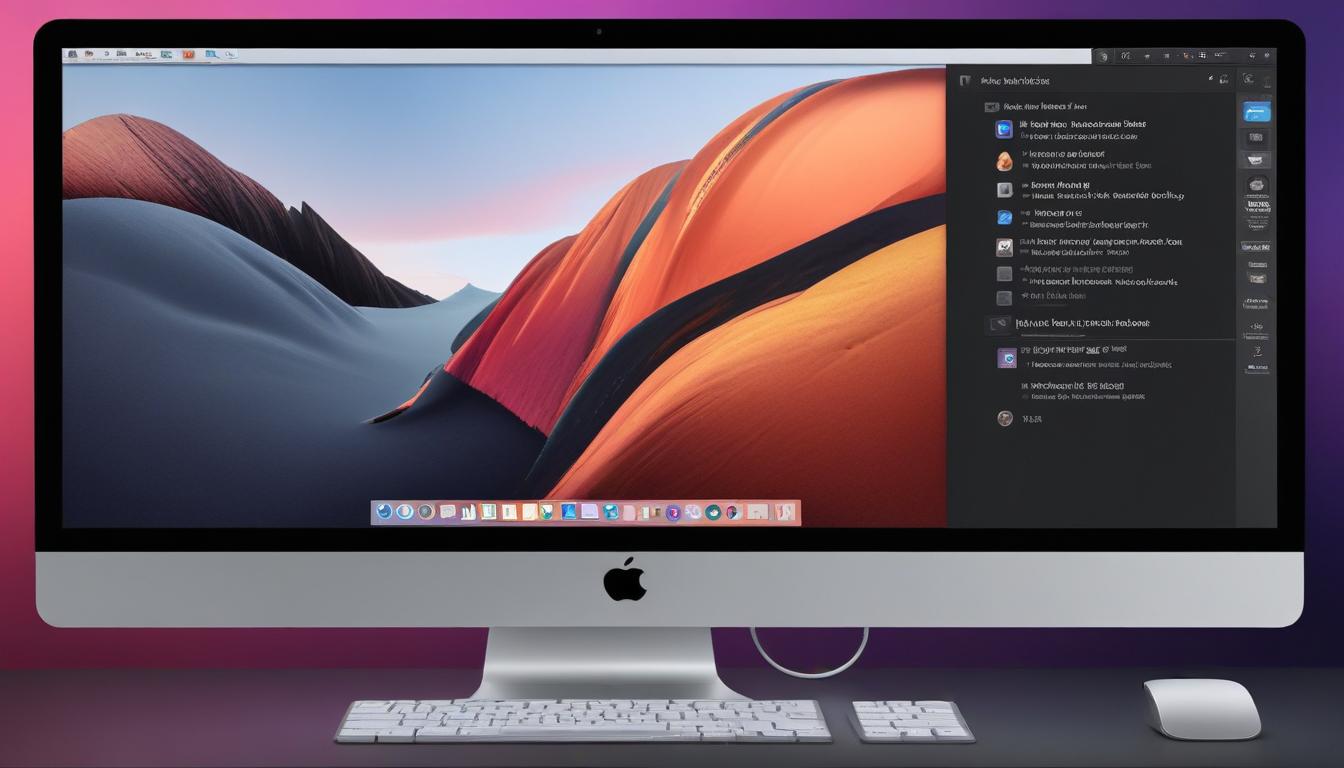
macOS is renowned for its sleek design and intuitive workflows, but power users often find themselves missing the familiarity and efficiency of Windows’ taskbar. RetroTaskbar aims to bridge this gap by bringing Windows-style taskbar functionalities to macOS without compromising the native ecosystem. Whether you’re a developer, designer, or power user, RetroTaskbar can streamline your workflow by providing quick access to windows, applications, and notifications—all in a familiar layout. This utility is not just about aesthetics; it’s about enhancing productivity by reducing the cognitive load of switching between apps and managing windows. By reimagining macOS window management through the lens of Windows UX principles, RetroTaskbar offers a unique blend of innovation and familiarity.
- Enhanced window visibility with a Windows-like taskbar interface
- Seamless integration with macOS Spaces for multi-desktop workflows
- Quick access to minimized and hidden windows without clutter
- Customizable taskbar appearance to match macOS aesthetics
- Real-time window tracking and grouping for better organization
#macOS #UXDesign #ProductDesign #UserExperience #Productivity #Softved
Designing Pixel-Perfect UI Elements for macOS
The cornerstone of RetroTaskbar’s appeal lies in its pixel-perfect UI design, which ensures a cohesive and visually appealing experience that aligns with macOS’s design language. Unlike generic taskbar applications that feel out of place, RetroTaskbar prioritizes native-like aesthetics by using system fonts, color schemes, and animations that resonate with macOS users. The taskbar itself is designed to be highly customizable, allowing users to adjust transparency, icon spacing, and even the position of the taskbar on the screen. This level of customization ensures that RetroTaskbar doesn’t just look like a Windows utility dumped onto macOS but rather an organic extension of the macOS environment.
- Utilize system fonts (San Francisco) for consistent typography
- Adopt macOS color schemes (light/dark mode support) for visual harmony
- Implement native macOS animations and transitions for smooth interactions
- Design scalable icons that adapt to different screen resolutions
- Ensure the taskbar blends seamlessly with the menu bar and dock
Implementing Window Tracking via Accessibility APIs
One of the most critical challenges in developing RetroTaskbar is accurately tracking open windows across all applications. macOS doesn’t provide a public API for this purpose, but the Accessibility API offers a workaround by allowing applications to query the system for window information. RetroTaskbar leverages this API to monitor open windows in real-time, enabling it to display an up-to-date list of running applications and their respective windows. The implementation involves requesting user permissions for Accessibility access, which is necessary for the utility to function properly. Once granted, the API provides detailed information about each window, including its title, application name, and screen position, which are then used to populate the taskbar.
- Request Accessibility permissions upfront to ensure full functionality
- Use the AXUIElement API to query window information from applications
- Handle permission revocations gracefully to avoid crashes or silent failures
- Optimize API calls to minimize system resource usage and latency
- Implement error handling for applications that block Accessibility queries
Overcoming Multi-Monitor Spaces Challenges
macOS Spaces, the virtual desktop system, introduces a unique challenge for window management utilities like RetroTaskbar. Unlike Windows, where desktops are more fluid, macOS Spaces treats each desktop as a separate entity, making it difficult to track windows across different spaces. RetroTaskbar tackles this by leveraging additional Accessibility API features to detect the current active space and the windows associated with it. The utility also supports multi-monitor setups by ensuring that the taskbar adapts to each display independently, providing a consistent experience regardless of the monitor configuration. This approach ensures that users can seamlessly switch between spaces and monitors without losing track of their windows.
- Detect the active Space using Accessibility API to prioritize window display
- Support multi-monitor configurations with independent taskbars per display
- Implement Spaces-aware window grouping to reflect virtual desktop organization
- Handle Space transitions smoothly to avoid disruptions in workflow
- Ensure the taskbar updates in real-time when switching between Spaces
Notification Detection Without Public APIs
Notifications are a core part of modern workflows, but macOS doesn’t expose a public API for detecting or interacting with them. RetroTaskbar circumvents this limitation by monitoring the Notification Center’s database, which stores all recent notifications. While this approach requires careful handling to avoid privacy concerns, it allows the utility to display notifications directly in the taskbar, providing a centralized view of alerts. The implementation involves parsing the SQLite database used by the Notification Center, which requires elevated permissions and robust error handling to ensure reliability. By integrating notifications into the taskbar, RetroTaskbar further enhances productivity by reducing the need to switch between applications to check for updates.
- Monitor the Notification Center SQLite database for recent notifications
- Request necessary permissions to access user data securely
- Parse notification data to extract relevant information (title, app, time)
- Display notifications in a non-intrusive manner within the taskbar
- Handle database changes dynamically to ensure real-time updates
Optimizing Performance and Resource Usage
Performance is a critical consideration in the design of RetroTaskbar, as a poorly optimized utility can lead to lag, increased CPU usage, or even system instability. To ensure smooth operation, RetroTaskbar employs several optimization techniques, such as throttling API calls, caching window information, and minimizing background processes. The utility also includes a preference pane where users can adjust the polling interval for window and notification updates, balancing between real-time accuracy and system resource consumption. By prioritizing efficiency, RetroTaskbar delivers a responsive and reliable experience that doesn’t compromise the performance of the host system.
- Throttle Accessibility API calls to reduce CPU and memory usage
- Cache window and notification data to minimize redundant queries
- Implement background polling with adjustable intervals for users
- Optimize UI rendering to prevent frame drops or lag
- Conduct stress testing to identify and resolve performance bottlenecks
Testing and Debugging: Ensuring Reliability Across macOS Versions
macOS undergoes frequent updates, and each version may introduce changes that affect the functionality of utilities like RetroTaskbar. To ensure long-term reliability, the development process includes rigorous testing across multiple macOS versions, from Catalina to the latest release. Automated testing frameworks are used to simulate user interactions, while manual testing ensures that edge cases—such as rare permission scenarios or application-specific quirks—are handled gracefully. Debugging is facilitated by comprehensive logging and crash reporting, which helps developers quickly identify and resolve issues. By maintaining a robust testing pipeline, RetroTaskbar can adapt to macOS updates and continue providing a seamless experience for users.
- Test on multiple macOS versions (Catalina, Big Sur, Monterey, Ventura, Sonoma)
- Use automated testing to simulate user interactions and workflows
- Manually test edge cases, such as permission revocations or rare app behaviors
- Implement comprehensive logging for debugging and issue resolution
- Provide users with easy-to-access crash reports for troubleshooting
Future Enhancements: What’s Next for RetroTaskbar?
The journey of RetroTaskbar is far from over. Future enhancements aim to further integrate the utility into the macOS ecosystem while introducing innovative features that cater to power users. Planned updates include deep integration with macOS’s Shortcuts app, allowing users to trigger automation workflows directly from the taskbar. Another exciting direction is the development of a plugin system, enabling third-party developers to extend RetroTaskbar’s functionality with custom modules. Additionally, the team is exploring AI-driven window management, where the taskbar could intelligently suggest window groupings based on usage patterns. These enhancements will ensure that RetroTaskbar remains at the forefront of macOS productivity tools, continually evolving to meet the needs of its users.
- Integrate with macOS Shortcuts for automation workflows
- Develop a plugin system for third-party customization
- Explore AI-driven window management for intelligent grouping
- Add support for custom themes and icon packs
- Expand multi-monitor and multi-desktop support