Introduction to AI System Observability
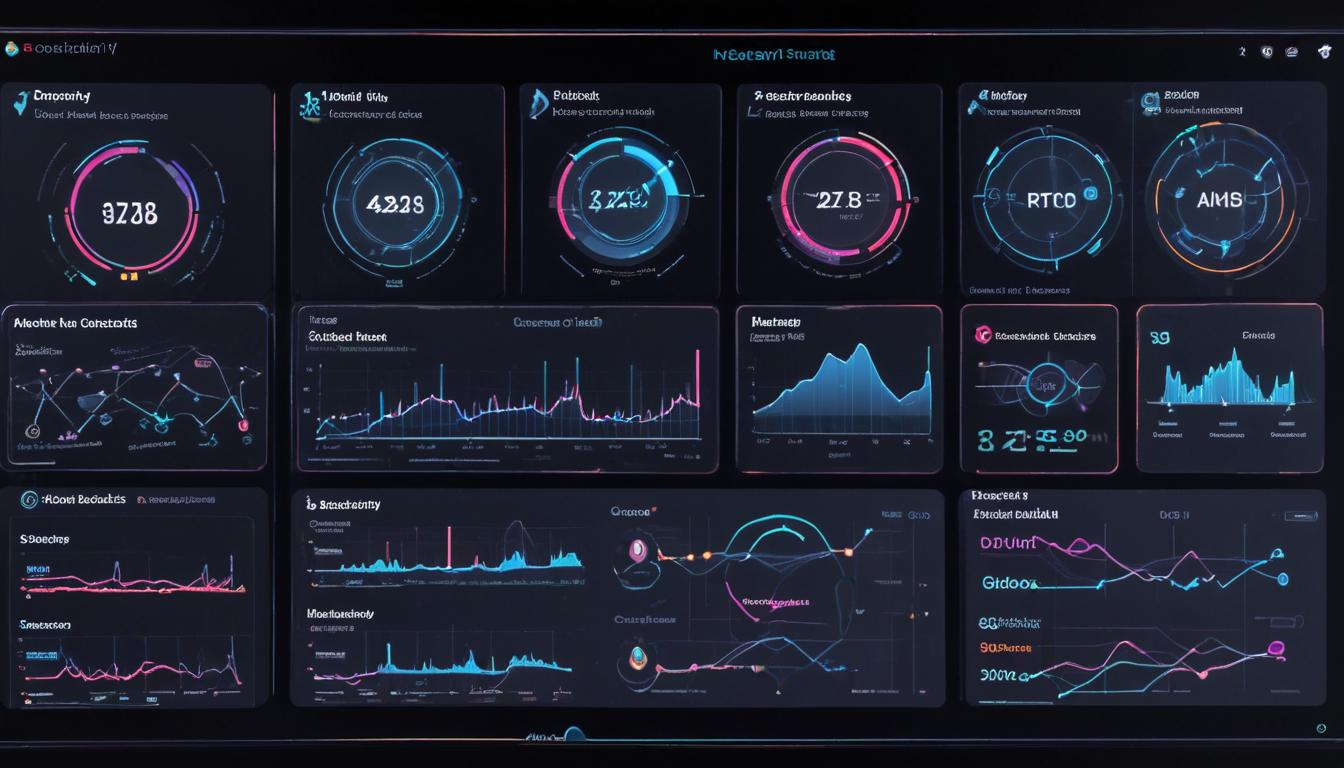
AI systems are transforming industries by automating complex tasks, but their dynamic and opaque nature makes it challenging to ensure reliability, efficiency, and security. Without proper observability, AI models can suffer from performance degradation, unexpected costs, or security vulnerabilities, leading to poor user experiences and operational inefficiencies. Observability in AI systems goes beyond traditional monitoring—it requires a structured framework that captures real-time insights into the entire AI pipeline, from data ingestion to model inference and agent orchestration. This article introduces a unified five-pillar observability framework designed to address cost, quality, and security concerns in real-time, providing actionable metrics and implementation strategies for AI practitioners.
Why AI System Observability Matters
AI systems are not static; they evolve with data, user interactions, and external environments. Traditional monitoring tools fall short in capturing the nuances of AI workflows, such as agent behavior, retrieval pipeline performance, or security threats. Observability bridges this gap by providing granular visibility into every component of an AI system. For businesses, this means reduced downtime, optimized costs, improved model performance, and enhanced security. Without observability, organizations risk flying blind, making it difficult to diagnose issues or improve AI-driven decisions. This section explores the critical need for observability in AI systems and its impact on operational excellence and user trust.
The Five Pillars of AI System Observability
- Agent Orchestration Observability
- Retrieval Pipeline Monitoring
- Cost Monitoring and Optimization
- Quality Evaluation and Feedback Loops
- Security Guardrails and Threat Detection
Pillar 1: Agent Orchestration Observability
Agent orchestration is the backbone of AI systems, where multiple agents interact to complete tasks. Observing agent behavior involves tracking execution paths, latency, success rates, and error propagation. Key metrics include agent invocation frequency, response times, and dependency failures. JSON span examples can capture these interactions, providing a detailed trace of agent workflows. Anti-patterns to avoid include unmonitored agent chaining, lack of error handling, and poor resource allocation. Implementing observability here ensures agents operate efficiently and reliably, reducing operational overhead and improving user outcomes.
Pillar 2: Retrieval Pipeline Monitoring
Retrieval pipelines, such as those in RAG (Retrieval-Augmented Generation) systems, are critical for providing accurate and contextually relevant responses. Monitoring these pipelines involves tracking query latency, retrieval accuracy, and data freshness. Metrics like top-K retrieval success rate, relevance scoring, and cache hit ratio help evaluate performance. JSON spans can log retrieval paths, highlighting inefficiencies or data staleness. Common anti-patterns include over-reliance on static datasets, ignoring retrieval feedback loops, and failing to optimize vector databases. Effective monitoring ensures retrieval pipelines deliver high-quality, timely responses while minimizing computational costs.
Pillar 3: Cost Monitoring and Optimization
AI systems incur costs at every stage, from data processing to model inference and agent execution. Cost monitoring involves tracking infrastructure expenses, API call volumes, and resource utilization. Metrics like cost per inference, token usage, and GPU utilization provide insights into spending patterns. JSON spans can log resource consumption, enabling cost attribution to specific workflows or users. Anti-patterns include unoptimized model serving, lack of cost alerts, and ignoring idle resource waste. By implementing cost observability, organizations can identify inefficiencies, optimize cloud spend, and align AI investments with business goals.
Pillar 4: Quality Evaluation and Feedback Loops
Quality evaluation ensures AI systems deliver accurate, relevant, and safe outputs. Observability here involves tracking user-perceived quality metrics such as response relevance, hallucination rates, and safety violations. Techniques like human-in-the-loop feedback, automated evaluation benchmarks, and A/B testing provide actionable insights. JSON spans can log user interactions, capturing feedback on model outputs. Anti-patterns include ignoring user feedback, relying solely on automated metrics, and failing to address bias or toxicity in responses. A robust quality observability framework enhances model performance and user satisfaction.
Pillar 5: Security Guardrails and Threat Detection
Security is paramount in AI systems, where vulnerabilities can lead to data breaches, model poisoning, or adversarial attacks. Observability for security involves monitoring for anomalous behavior, unauthorized access, and data leaks. Metrics like failed authentication attempts, unusual API call patterns, and model input anomalies provide early warnings. JSON spans can log security events, enabling real-time threat detection. Anti-patterns include lack of encryption, ignoring input validation, and failing to monitor third-party dependencies. Implementing security observability safeguards AI systems against emerging threats while ensuring compliance with regulations.
Actionable Metrics for AI Observability
To make observability actionable, organizations must define key metrics aligned with business goals. These include latency percentiles, error rates, cost per transaction, retrieval relevance scores, and security incident counts. JSON span examples can standardize how these metrics are logged across the AI pipeline. For instance, a JSON span for agent orchestration might include fields like agent_id, invocation_time, success_status, and error_message. By consistently tracking these metrics, teams can quickly identify issues, prioritize fixes, and measure improvements.
Implementing a Minimal Observability Framework
Building an observability framework doesn’t require a massive overhaul; a minimal implementation can start with open-source tools like Prometheus for metrics, Grafana for visualization, and OpenTelemetry for tracing. Begin by instrumenting critical components such as agent orchestration, retrieval pipelines, and model inference endpoints. Deploy JSON span logging to capture workflows, and set up alerts for anomalies like high latency or cost spikes. This phased approach ensures observability is scalable, cost-effective, and aligned with business needs.
Anti-Patterns to Avoid in AI Observability
- Ignoring end-to-end tracing, leading to fragmented visibility
- Relying solely on automated metrics without human-in-the-loop validation
- Failing to correlate cost metrics with model performance or user experience
- Neglecting security observability, exposing systems to undetected threats
- Overcomplicating the observability stack without clear ownership or goals
Future Trends in AI Observability
The field of AI observability is rapidly evolving, with trends like AI-native monitoring tools, real-time feedback integration, and automated remediation gaining traction. Emerging technologies such as eBPF-based tracing and causal inference for root cause analysis promise deeper insights into AI system behavior. As AI adoption grows, observability will become a competitive differentiator, enabling organizations to build trust, optimize performance, and innovate responsibly. Staying ahead of these trends ensures long-term success in AI-driven initiatives.
Conclusion: Building a Culture of AI Observability
AI system observability is not just a technical requirement—it’s a cultural shift that prioritizes transparency, accountability, and continuous improvement. By adopting a five-pillar framework, organizations can gain real-time visibility into cost, quality, and security, enabling data-driven decisions and proactive issue resolution. Start small, iterate often, and foster collaboration between engineering, data science, and security teams to build a robust observability culture. The result is AI systems that are not only powerful but also reliable, efficient, and secure.