Why Traditional A/B Testing Fails in Low-Traffic Environments
In low-traffic environments, traditional A/B testing often leads to inconclusive results due to insufficient statistical power. The rigid p-value threshold of 0.05 can mislead developers into accepting or rejecting hypotheses based on weak evidence, creating a false sense of certainty. This is exacerbated by the ‘winner’s curse,’ where the winning variant appears successful purely by chance, not because it’s truly better. Developers in AI-driven environments need a more nuanced approach that balances speed and accuracy without sacrificing reliability.
Introducing the Three-Tier Confidence Model
To address the limitations of traditional A/B testing, we propose a three-tier confidence model that categorizes decisions based on evidence quality: Proven, Directional, and Speculative. This framework allows developers to make informed choices even when data is scarce or noisy. The Proven tier relies on robust statistical significance, the Directional tier uses trends and pooling to guide decisions, and the Speculative tier embraces uncertainty while setting clear expectations for future validation.
- Proven Tier: Requires high statistical power (e.g., p < 0.01) and large sample sizes. Decisions here are backed by strong evidence and low risk of false positives.
- Directional Tier: Relies on weaker evidence (e.g., p < 0.1) but shows consistent trends across multiple metrics or time periods. Ideal for intermediate decisions with moderate risk.
- Speculative Tier: Used when evidence is minimal or contradictory. Decisions here are treated as hypotheses to be tested further, with clear milestones for validation.
Implementing Sequential Testing for Faster Iterations
Sequential testing allows developers to analyze data as it accumulates, rather than waiting for a fixed sample size. This approach is particularly useful in low-traffic environments where gathering enough data for traditional A/B tests is impractical. By setting interim boundaries for stopping or continuing a test, developers can make decisions sooner while controlling the overall error rate. Tools like the Sequential Probability Ratio Test (SPRT) or Bayesian sequential analysis can automate this process, reducing time-to-decision without compromising accuracy.
Triangulating Evidence: Combining Multiple Data Sources
Triangulation involves combining evidence from different sources or methods to strengthen conclusions. In low-traffic environments, no single metric or test may provide enough confidence. Instead, developers can use a mix of quantitative data (e.g., conversion rates, engagement metrics) and qualitative insights (e.g., user feedback, support tickets) to paint a clearer picture. For example, if a Directional Tier test shows a positive trend in conversion rates but negative feedback from users, triangulation can help identify whether the issue lies in the metric, the user experience, or external factors.
Pooling Techniques: Amplifying Signal in Sparse Data
Pooling aggregates data across multiple experiments or time periods to increase statistical power. This technique is especially useful for features that are rarely tested or have low traffic. For instance, if you’re testing a new feature that affects only 1% of users, pooling data from similar past experiments can help detect meaningful trends. Pooling can be done using fixed-effects models (assuming all experiments measure the same effect) or random-effects models (accounting for variability between experiments). Tools like Meta-Analysis or hierarchical Bayesian models can facilitate this process.
Avoiding the Winner’s Curse: Managing Risk in Data-Driven Decisions
The winner’s curse occurs when a variant appears successful due to random chance, not because it’s truly better. To mitigate this risk, developers should set stricter thresholds for Proven Tier decisions and use Directional or Speculative tiers for interim rollouts. Additionally, implementing rolling deployments or canary releases can help validate changes on a small subset of users before full-scale adoption. Clear documentation of assumptions, hypotheses, and validation plans is also critical to avoid overconfidence in early results.
Practical Steps to Implement the Framework in Your Workflow
- Audit your current testing practices: Identify where traditional A/B testing is failing due to low traffic or noise.
- Classify your experiments: Assign each experiment to a Proven, Directional, or Speculative tier based on initial data quality and risk tolerance.
- Adopt sequential testing tools: Integrate tools like Google Optimize, Optimizely, or custom Bayesian frameworks to automate interim analyses.
- Use triangulation and pooling: Combine data from multiple sources and experiments to strengthen conclusions.
- Set clear validation milestones: Define success criteria for each tier and schedule follow-up tests to confirm or refute initial hypotheses.
- Document and iterate: Maintain a log of decisions, assumptions, and outcomes to refine your framework over time.
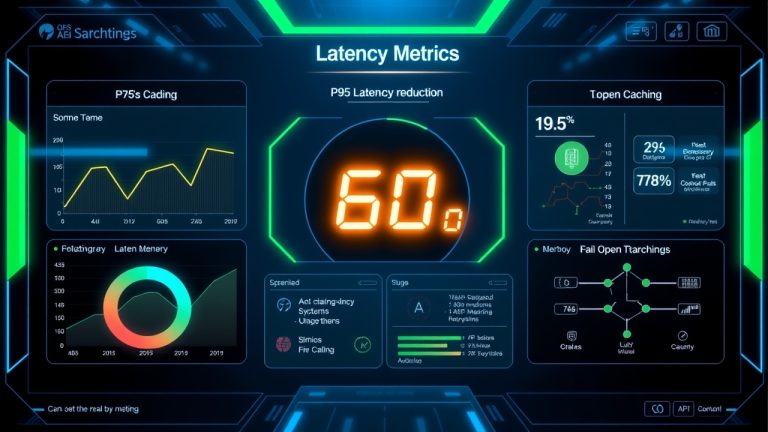
Case Study: How a SaaS Company Reduced Decision Latency by 60%
A mid-sized SaaS company struggled with slow A/B testing cycles due to low user engagement in certain features. By implementing the three-tier confidence model, they reduced the average decision latency from 4 weeks to 1.5 weeks. Proven Tier tests were reserved for high-impact changes, while Directional Tier tests allowed faster iterations on lower-risk features. Pooling techniques were used to aggregate data from past experiments, and sequential testing cut the time needed to reach statistical significance. The result was a 40% improvement in feature adoption rates and a 25% reduction in user churn.
Tools and Technologies to Support Your Framework
- Statistical analysis: R, Python (with libraries like SciPy, StatsModels, or PyMC3), or commercial tools like SPSS.
- A/B testing platforms: Google Optimize, Optimizely, VWO, or Adobe Target for automated testing.
- Sequential testing frameworks: Custom implementations using Bayesian statistics or dedicated libraries like PySPRT.
- Data visualization: Tableau, Power BI, or Grafana to monitor trends and triangulate insights.
- Experiment tracking: Tools like Amplitude, Mixpanel, or Heap to log user behavior and experiment outcomes.
Future-Proofing Your Decision-Making Process
As AI-driven development becomes more prevalent, the ability to make fast, data-informed decisions will be a competitive advantage. The three-tier confidence model provides a scalable framework for navigating low-traffic environments, but it’s not a one-size-fits-all solution. Regularly revisit your thresholds, experiment with new pooling techniques, and incorporate machine learning models to predict experiment outcomes. By embedding this framework into your culture, you’ll build a data-driven mindset that thrives even in uncertainty.
Tags:A/B testing, data-driven development, confidence model, sequential testing, AI-driven decisions, low-traffic optimization, winner’s curse, statistical triangulation, pooling techniques, evidence-based development,