Category: Artificial Intelligence
Tags:AI governance, AI execution authority, AI policy enforcement, AI runtime governance, AI audit trails, AI compliance, AI security, deterministic AI blocking, signed governance receipts, AI agent governance,
Introduction: The Hidden Crisis of AI Execution Authority
As AI systems evolve from simple automation tools to fully autonomous agents capable of making real-time decisions, a critical challenge emerges: execution authority. Unlike traditional software, AI agents operate in dynamic environments where their actions can have immediate and irreversible consequences. Yet, many organizations lack the mechanisms to validate, restrict, or audit these actions in real time. This governance gap creates a silent crisis—one where AI agents may execute unauthorized tasks, bypass policies, or even breach security protocols without detection. AI Governance 2.0 addresses this by introducing runtime execution governance frameworks that validate, restrict, and audit every AI decision before it impacts systems or users.
#ArtificialIntelligence #AIGovernance #TechnologyLeadership #EnterpriseAI #ResponsibleAI #Softved
Why Traditional Governance Fails for AI Agents
Traditional governance models, designed for static software systems, are ill-equipped to handle the fluid and unpredictable nature of AI agents. These models often rely on pre-deployment approvals, periodic audits, or manual oversight—processes that are too slow for real-time AI execution. For example, an AI agent authorized to process customer requests might inadvertently trigger a database deletion if its parameters evolve during runtime. Without runtime checks, such actions go unchallenged until it’s too late. Additionally, traditional governance lacks mechanisms to verify the authenticity of AI decisions, leaving organizations vulnerable to spoofed or manipulated actions. AI Governance 2.0 bridges this gap by enforcing governance at the point of execution, ensuring that every action is validated against current policies, user permissions, and system constraints.
Core Components of Execution Authority Governance
- Runtime Execution Authority Validation: Real-time verification of whether an AI agent is authorized to perform a specific action based on its identity, role, and current context. This includes validating against role-based access control (RBAC) policies, time-based restrictions, and environmental conditions (e.g., location, device, or network constraints).
- Deterministic Blocking Mechanisms: Automated systems that prevent unauthorized actions before they execute, using predefined rules or machine learning models trained to identify policy violations. These mechanisms operate with zero latency, ensuring that even the fastest AI agents cannot bypass governance.
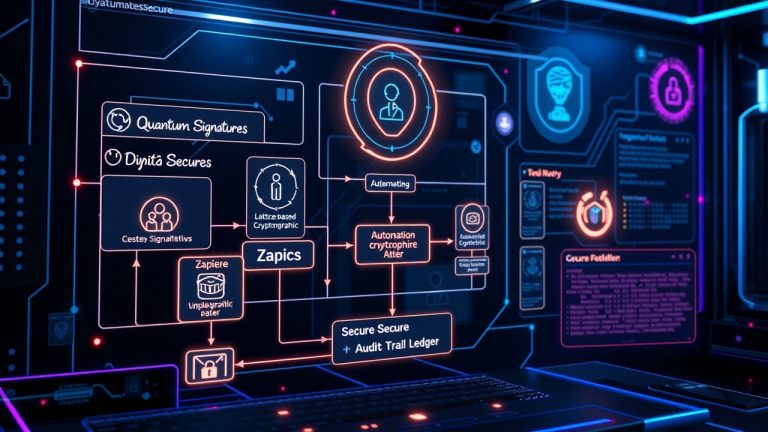
- Signed Governance Receipts: Cryptographic proofs issued by the governance system whenever an AI agent’s action is approved or blocked. These receipts include metadata such as the agent’s identity, the action performed, the timestamp, and the governance policy triggered. Receipts are tamper-proof and can be independently verified, providing a verifiable record of AI executions.
- Replay-Verifiable Audit Trails: Immutable logs of all AI actions, governance decisions, and system responses, structured to allow for replay and forensic analysis. These trails ensure that every decision can be traced back to its origin, even if the AI agent or underlying system is compromised. Audit trails also support compliance reporting and regulatory requirements by providing a chronological record of all AI activities.
- Policy Enforcement Engines: Centralized systems that dynamically adjust governance rules based on real-time threats, compliance updates, or operational changes. These engines use AI-driven policy management to ensure that governance rules evolve alongside the AI agents they govern, reducing the risk of outdated or ineffective policies.
Step-by-Step Implementation of AI Governance 2.0
- Assess Current AI Dependencies: Audit existing AI agents to identify their execution scope, dependencies, and potential failure points. This includes mapping out all actions they can perform, the systems they interact with, and the policies they are expected to follow.
- Define Governance Policies: Establish clear, granular policies for AI execution, covering roles, permissions, environmental constraints, and real-time restrictions. Policies should be written in a machine-readable format (e.g., YAML or JSON) to enable automated enforcement.
- Integrate Runtime Validation: Embed governance checkpoints into the AI agent’s execution pipeline. This involves modifying the agent’s code to query the governance system before performing any action, ensuring that each step is pre-approved.
- Deploy Deterministic Blocking: Implement blocking mechanisms that halt unauthorized actions in real time. These can be rule-based (e.g., blocking all actions outside business hours) or AI-driven (e.g., detecting anomalous actions that deviate from learned patterns).
- Generate Signed Receipts: Configure the governance system to issue signed receipts for every action, including approvals and rejections. Store these receipts in a secure, decentralized ledger (e.g., blockchain or distributed database) to prevent tampering.
- Build Audit Trails: Design audit trails to capture all AI actions, governance decisions, and system responses in a structured, replay-friendly format. Use tools like ELK Stack, Splunk, or custom logging solutions to aggregate and analyze these logs.
- Test and Iterate: Conduct rigorous testing to validate the governance system’s effectiveness. This includes penetration testing, policy violation simulations, and performance benchmarking under load. Iterate based on findings to address gaps or vulnerabilities.
- Monitor and Adapt: Continuously monitor the governance system for policy violations, performance bottlenecks, or emerging threats. Use AI-driven analytics to detect anomalies and dynamically adjust policies to maintain robust execution authority governance.
Real-World Use Cases: Where Execution Authority Governance Saves the Day
- Financial Services: An AI-powered fraud detection agent processes transactions in real time. Governance 2.0 ensures the agent cannot approve high-value transactions without multi-factor authorization from a human supervisor, preventing fraudulent payouts.
- Healthcare: An AI diagnostic agent recommends treatments based on patient data. Governance policies restrict the agent to only suggest treatments approved by the hospital’s clinical guidelines, ensuring compliance with medical regulations and reducing liability risks.
- Manufacturing: An AI-driven predictive maintenance agent schedules equipment repairs. Governance ensures the agent cannot override safety protocols or initiate maintenance during peak production hours, avoiding costly downtime or accidents.
- E-Commerce: An AI chatbot handles customer refunds autonomously. Governance policies limit the chatbot’s refund authority to transactions under $500 and require manager approval for larger refunds, reducing financial losses from fraud.
- Government: An AI system processes citizen requests for public services. Governance ensures the system adheres to strict data privacy laws, such as GDPR, by validating every action against compliance rules and logging all decisions for audits.
Overcoming Common Challenges in AI Governance Implementation
Implementing AI Governance 2.0 is not without its hurdles. Organizations often face resistance from teams accustomed to traditional governance models, skepticism about the overhead of runtime validation, or concerns about the complexity of integrating new systems. Additionally, governance policies must balance strictness with flexibility—too rigid, and the system stifles innovation; too lenient, and it fails to prevent unauthorized actions. To overcome these challenges, start with a pilot program focused on high-risk AI agents, gradually expanding governance coverage as confidence grows. Collaborate with legal, security, and compliance teams to align policies with regulatory requirements and business goals. Invest in training to ensure teams understand the importance of execution authority governance and how to adapt their workflows.
The Future of AI Governance: Trends and Predictions
AI Governance 2.0 is just the beginning. As AI systems become more autonomous, governance frameworks will need to evolve to address new challenges, such as multi-agent collaboration, federated learning, and AI-driven policy generation. Emerging trends include decentralized governance models (e.g., blockchain-based execution authority), AI-driven policy enforcement (e.g., self-adjusting policies based on real-time threats), and integration with zero-trust security architectures. The future of AI governance will also see increased collaboration between organizations to share best practices, threat intelligence, and governance frameworks, creating a unified defense against unauthorized AI actions. As regulations like the EU AI Act take effect, governance will become a competitive advantage, with companies that implement robust frameworks gaining trust and market share.
Conclusion: Secure Your AI Future with Governance 2.0
The battle for execution authority is already underway, and the stakes couldn’t be higher. Without proper governance, AI agents can become uncontrollable forces, executing actions that undermine security, compliance, and business integrity. AI Governance 2.0 provides the tools and frameworks needed to regain control, ensuring that every AI decision is validated, restricted, and auditable. By implementing runtime execution authority validation, deterministic blocking, signed receipts, and replay-verifiable audit trails, organizations can prevent unauthorized actions, enforce policy limits, and maintain full accountability. The time to act is now—before an AI agent’s unchecked decision becomes tomorrow’s headline.